Naxos 23 by ZAR Formenti – DF200AP Suzuki
Naxos 23 by ZAR Formenti – DF200AP Suzuki


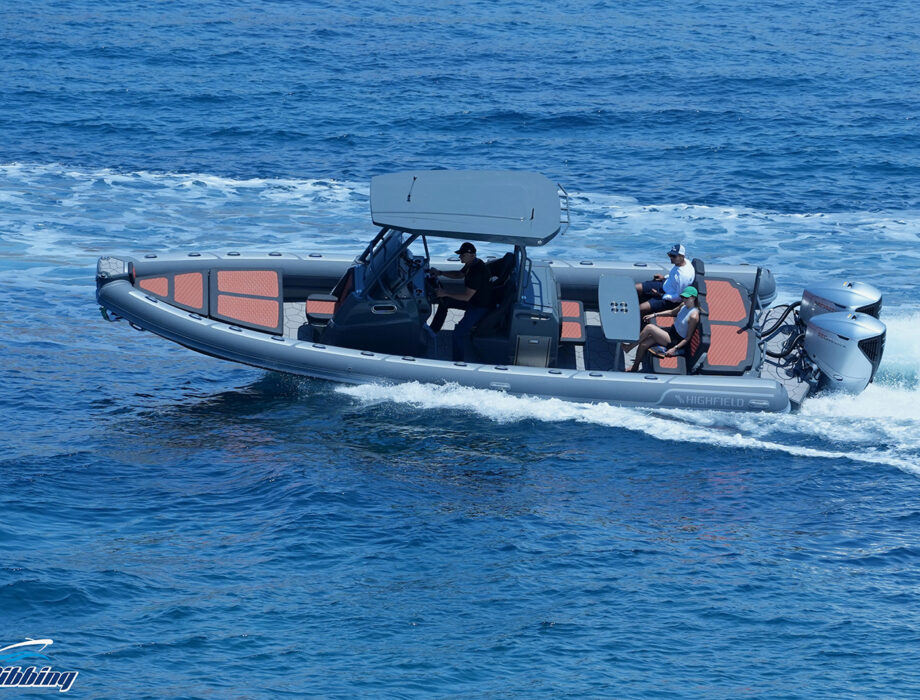
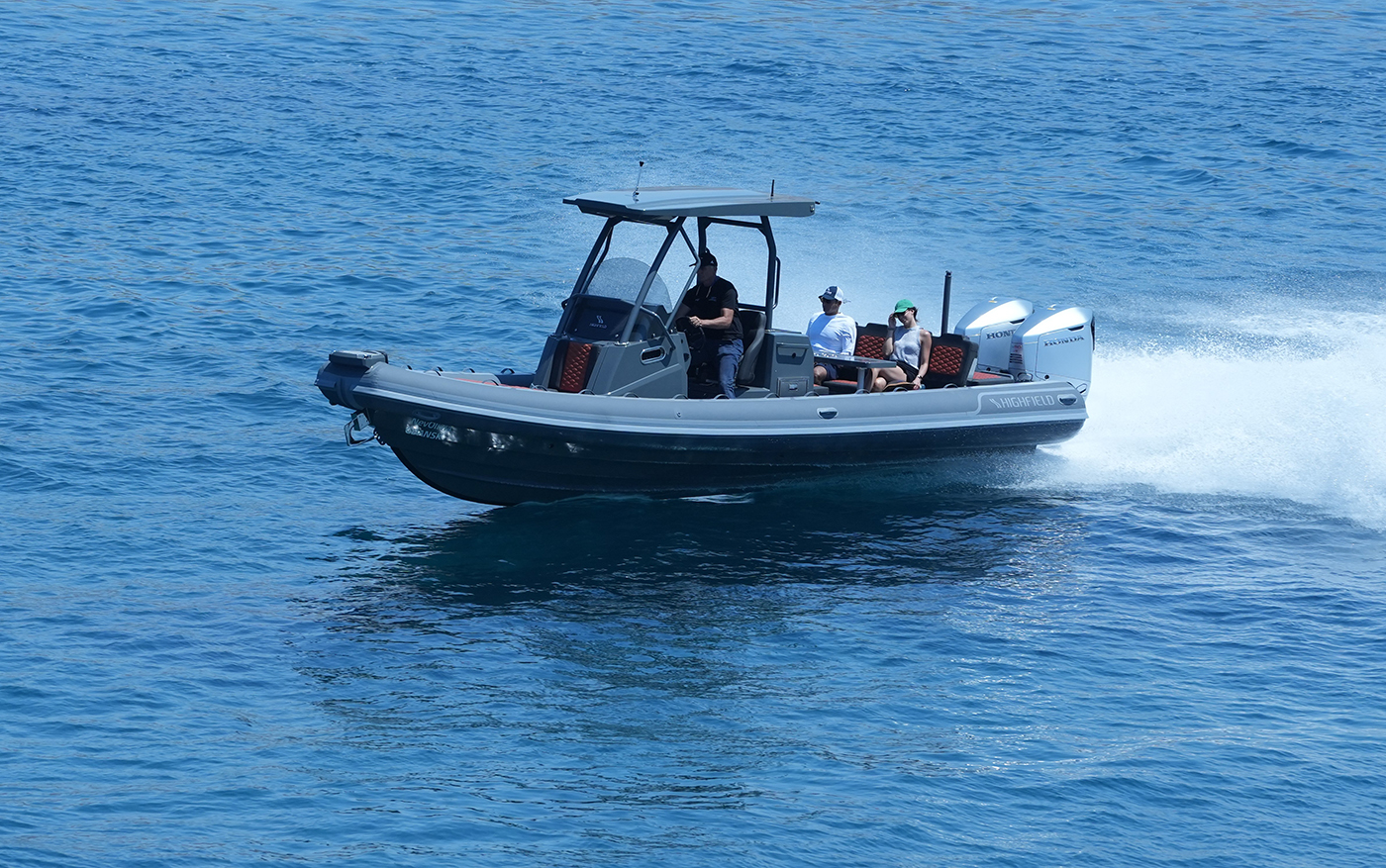
HIGHFIELD SP900 - Twin Honda BF250 V6
Riginos Yachts is one of the most well-established companies in the Greek recreational boating market, with many years of experience and a consistent presence in the fields of boat importation, sales, and technical support. Its philosophy is based on selecting manufacturers that combine reliability, modern design, and advanced technology. Through its continuous search for innovative products and its close relationship with customers, Riginos Yachts has established itself as one of the leading representatives of the Greek boating industry.
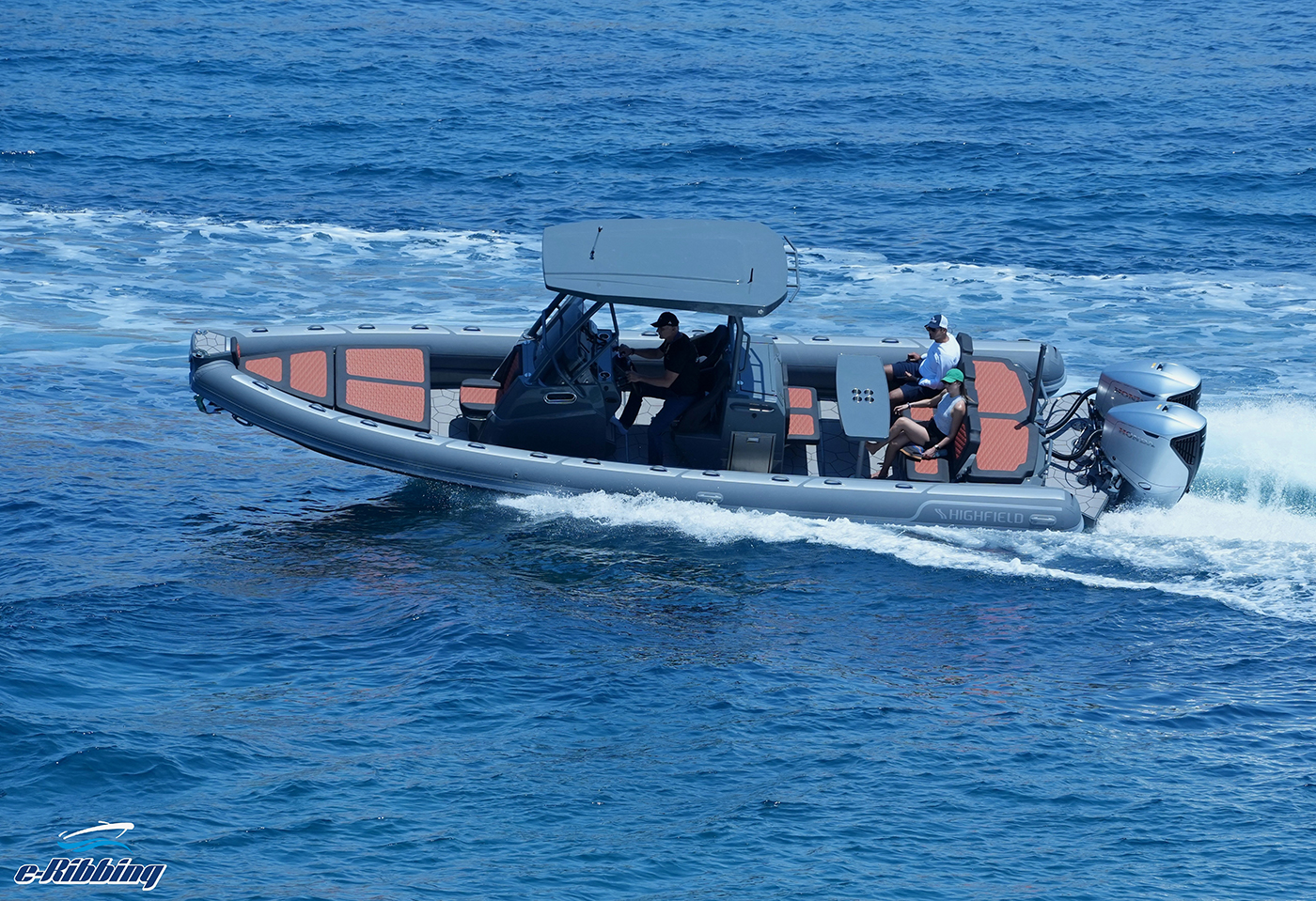
In recent years, the company has focused strongly on the inflatable boat market, continuously expanding its portfolio with internationally renowned brands such as Highfield and BRIG. Its partnership with Highfield has been particularly significant, as Riginos Yachts was the first company to introduce aluminium-hulled RIBs to the Greek market, paving the way for a category that was initially met with considerable skepticism.
Today, that perception has changed dramatically. Greek boat owners have come to recognize that modern aluminium hulls present no electrolysis issues when built and maintained according to the proper specifications. Furthermore, even in the event of damage, repairs can be carried out quickly and reliably. As a result, aluminium RIBs are steadily gaining popularity, thanks to their exceptional durability, reduced weight and long-term resistance to wear.
The Highfield Sport range starts at 2.20 metres and extends all the way to the 9.12-metre SP900, covering a broad spectrum of recreational boating needs. These models are primarily designed for owners seeking fast, comfortable day cruising, with a strong emphasis on ergonomics and family-oriented use.
Alongside the Sport range, Highfield also offers the Patrol series, developed specifically for professional applications. These models can be configured to meet the specific requirements of each operator, making them suitable for rescue services, coast guard operations, diving centres, commercial transport and any other application where reliability and customization are essential.
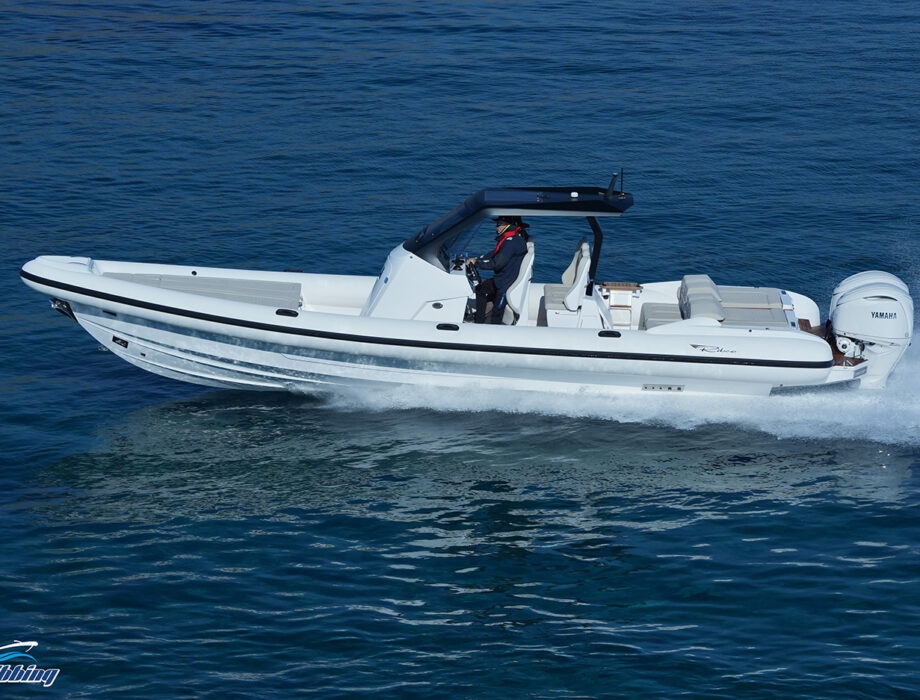
For this e-Ribbing sea trial, we selected the flagship of the Highfield Sport range, the Sport 900 (SP900). With an overall length of 9.12 metres, it is currently the largest aluminium-hulled model produced by the company. In its latest version, the outboard engine bracket has been fully integrated into the hull mould, resulting in increased structural rigidity, improved load distribution and an even cleaner, more contemporary appearance.
The Highfield Sport 900 perfectly reflects the company's design philosophy: a modern RIB that takes full advantage of aluminium construction, demonstrating in practice why this technology continues to gain an ever-growing share of the European boating market year after year.
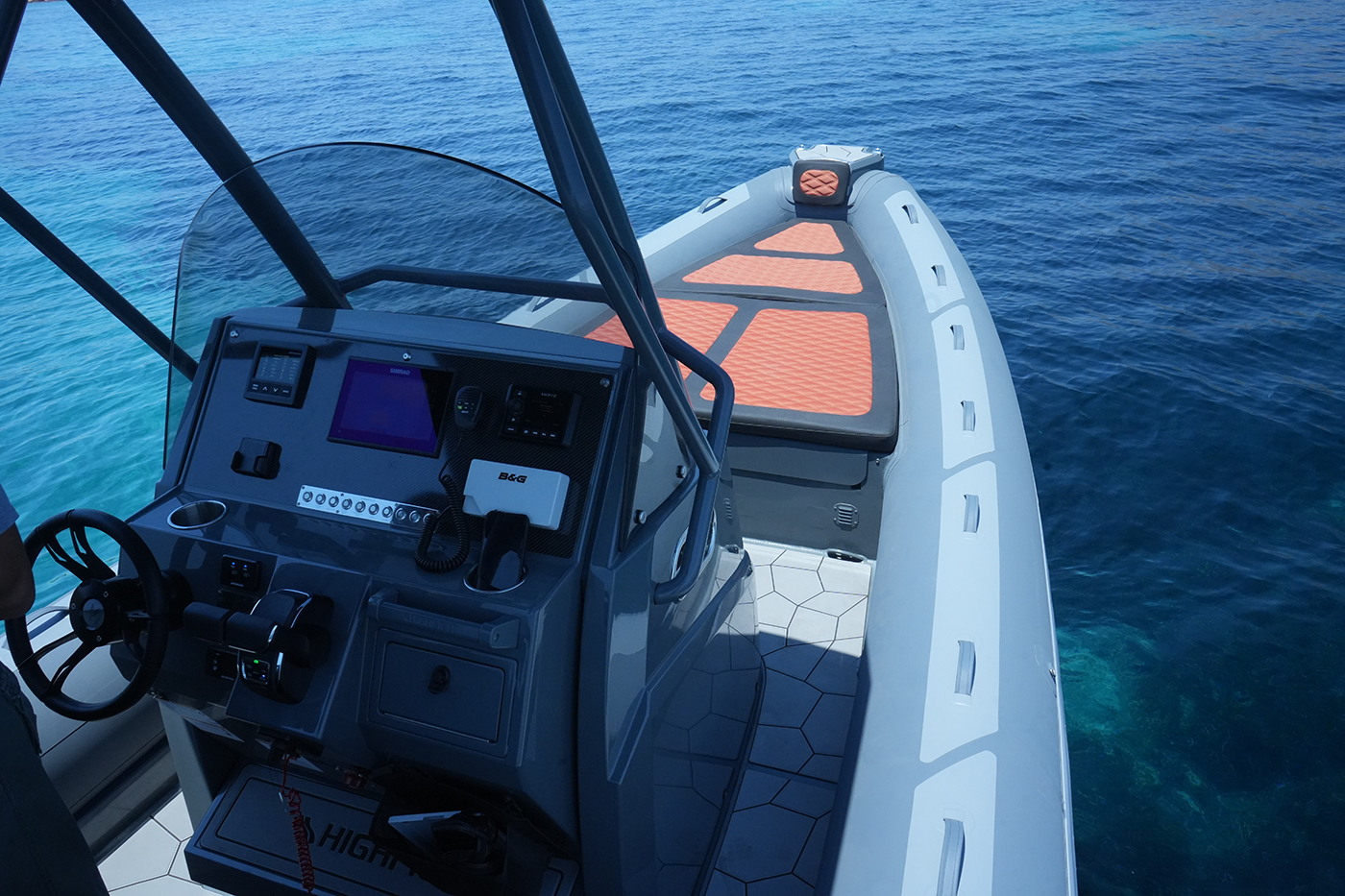
Before moving on to our sea trial impressions, it is worth taking a closer look at the deck layout, as the Highfield Sport 900 clearly demonstrates the company's commitment to both ergonomics and build quality.
The deck follows a modern design philosophy, where comfort, functionality and unrestricted passenger movement are key priorities. The efficient use of the available space creates the impression of a considerably larger boat, providing a comfortable environment both at anchor and while underway.
At the bow, a generous sunbed measuring 1.86 m in length and 1.40 m at its maximum width comfortably accommodates two or even three adults. Beneath the cushions, large storage compartments make excellent use of the available volume, while at the very front of the bow a compact yet practical boarding platform facilitates easy embarkation and disembarkation.
The centre console is positioned slightly forward, leaving 28 cm-wide side decks on both port and starboard for safe and easy access to the bow. By moving the console further forward, the designers have created a remarkably spacious aft cockpit, allowing for a generous seating area that significantly enhances comfort and onboard living.
The console itself features a contemporary design, highlighted by a large windscreen that provides effective protection for both the helmsman and the companion. The dashboard offers ample space for large-format multifunction displays, engine instrumentation and modern navigation electronics, while the ergonomic helm position provides excellent all-round visibility, allowing the operator to maintain full awareness in every direction.
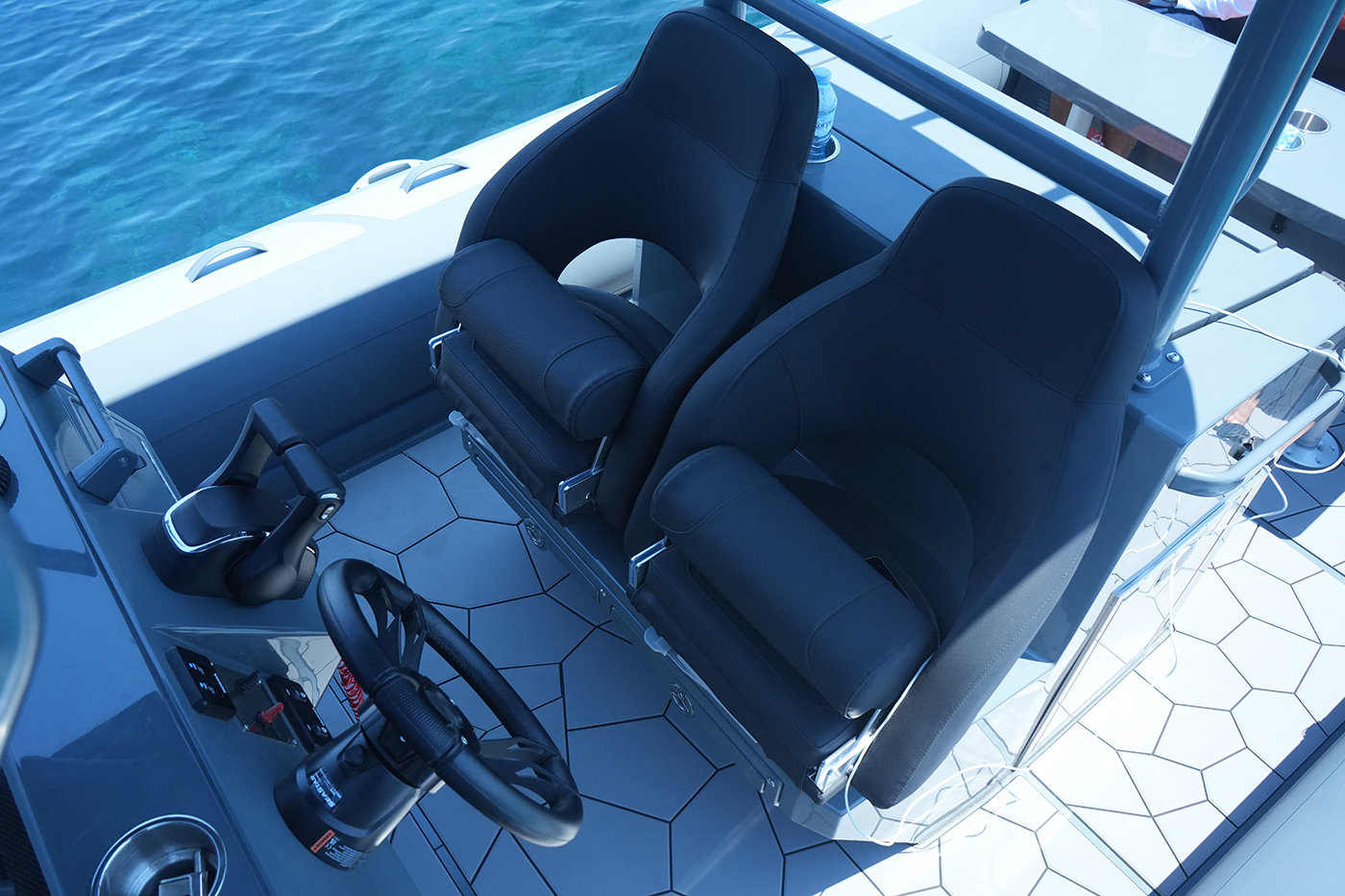
Immediately aft of the centre console is a highly practical wet bar, which can be equipped with a sink, refrigerator and additional storage compartments, providing everything needed for comfortable day trips or even extended cruising.
The forward section of the GRP wet bar module, which leaves 36 cm-wide walkways on both port and starboard sides, supports two independent bucket seats. Their ergonomic design allows the helmsman and companion to drive comfortably either seated or in a semi-standing position, ensuring excellent support and visibility under all sea conditions.
Completing the helm area is an elegantly designed aluminium T-top, securely mounted to both the centre console and the wet bar structure. Besides providing effective protection from both sun and rain, it integrates perfectly with the boat's overall styling, enhancing its sporty appearance while maintaining a high level of structural rigidity.
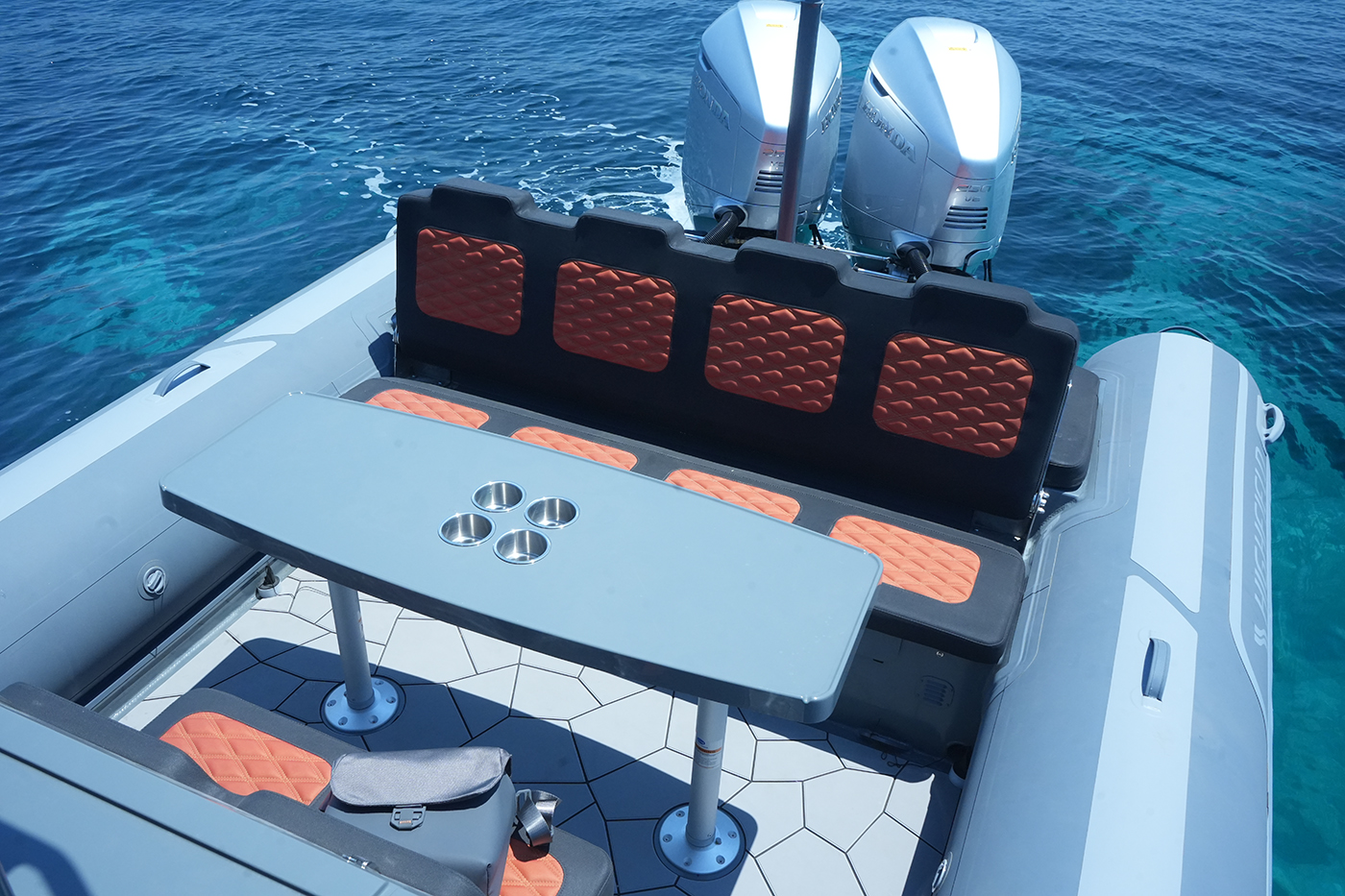
The aft cockpit is undoubtedly one of the most spacious and inviting areas on board. The large four-person aft bench, measuring 1.90 m in width, features a reclining backrest that folds forward to create a generous sunbed measuring 1.30 x 2.10 m, significantly expanding the boat's lounging area.
Forward of the aft seating is a large table, measuring 1.38 m in length with a maximum width of 52 cm. Combined with the foldaway two-person bench integrated into the aft section of the wet bar, it forms a remarkably spacious dining area that is impressive for a RIB of this size, comfortably accommodating the crew during meals or while relaxing at anchor.
Overall build quality is equally impressive. The choice of materials, upholstery, stainless-steel fittings and the attention paid to every finishing detail all convey the feeling of a solidly built, premium-quality boat. It is clear that Highfield has invested not only in its innovative aluminium hull technology, but also in developing a deck layout and level of craftsmanship that allow the Sport 900 to compete confidently with the RIBs in its class.
At Sea
Our test boat was powered by twin Honda BF250 V6 outboards mounted on the transom. The engines featured a 2.00:1 gear ratio and were fitted with 15 1/2" × 17" three-blade Honda propellers, a setup designed to deliver a balanced combination of acceleration, cruising efficiency and top-end performance.
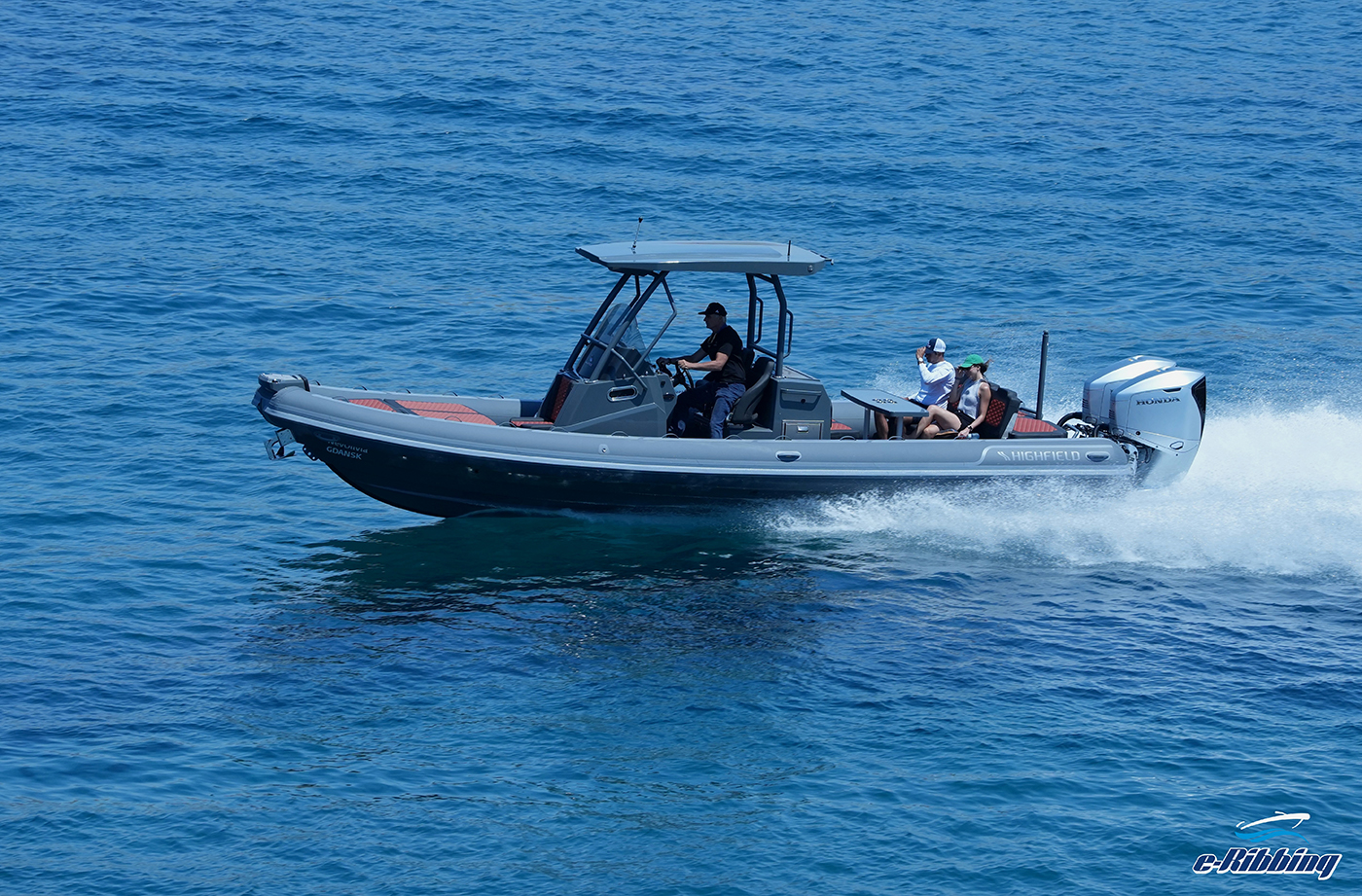
Before starting our performance measurements, we wanted to experience the behaviour of the Highfield Sport 900's aluminium hull in real-world conditions. Although aluminium RIBs have gained considerable popularity in recent years, they still represent a different approach compared to traditional GRP hulls, naturally raising both expectations and questions.
From the very first miles, it became evident that the aluminium construction influences not only the choice of material but also the way the hull responds to sea conditions. The Sport 900 tracked confidently through the waves, maintaining excellent directional stability while absorbing landings progressively and smoothly. There were no harsh impacts or abrupt reactions, even when encountering steeper waves and rougher sections of water.
Where we expected to notice the typical differences between an aluminium and a conventional fibreglass hull, the Highfield pleasantly surprised us. The helm felt remarkably solid and direct, with the boat responding precisely to every steering input. At no point did it convey the sensation of a "light" or nervous hull, something often associated -rightly or wrongly- with aluminium boats. On the contrary, its behaviour was predictable and reassuring, quickly inspiring confidence at the helm.
At cruising speeds, the hull's qualities became even more apparent. The Sport 900 maintained a composed ride, passing through the chop with smooth, controlled movements while significantly reducing the impacts transmitted to the crew. The result was a comfortable, fatigue-free and highly predictable ride, exactly what one expects from a modern offshore RIB.
Perhaps the most important conclusion from this first encounter is that the aluminium hull requires no adaptation from the helmsman. Instead, it delivers everything expected from a RIB in this category: predictable handling, very good shock absorption, impressive structural rigidity and a reassuring sense of security at sea.
Combined with the lower weight and outstanding durability that characterise aluminium construction, the Sport 900 demonstrates that this technology has now fully matured, offering a genuine and highly capable alternative to traditional fibreglass hulls.
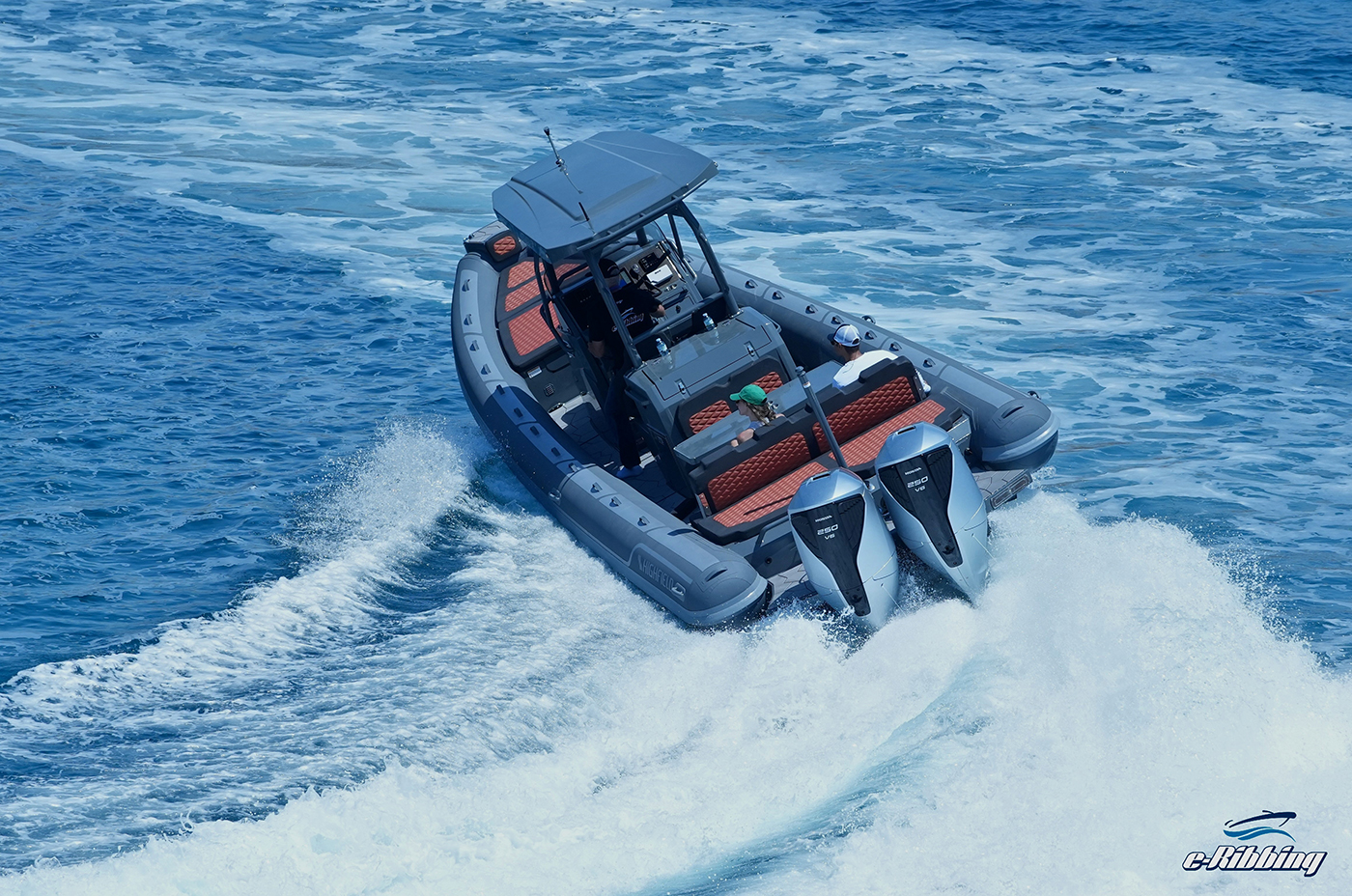
The fuel tanks contained approximately 380 litres of fuel, there were four people on board, and the boat carried all the equipment typically required for a day cruise. Despite the relatively heavy load, the Highfield Sport 900 showed no signs of being affected, making excellent use of the power delivered by the twin Honda outboards and converting it into immediate and efficient propulsion.
One of the first characteristics that stood out was the hull's ability to remain on the plane at remarkably low engine speeds. At just 2,300 rpm, the boat was already cruising at approximately 10 knots, maintaining a stable planing attitude without requiring additional throttle. This is a particularly valuable feature during long passages and, more importantly, in adverse weather conditions where high speeds are neither possible nor desirable, allowing the helmsman to maintain an economical and comfortable cruising speed without the boat dropping off the plane.
The Sport 900 reached the plane in approximately four seconds, while acceleration was perfectly linear, with no hesitation or flat spots throughout the rev range. The 30-knot mark was achieved just six seconds after launch, confirming the excellent harmony between hull and engines and demonstrating how efficiently the available horsepower is translated into performance.
The same positive impression continued during mid-range acceleration. Every movement of the throttle produced an immediate response, with the engines delivering power effortlessly while the hull maintained its balance without excessive bow rise or unwanted pitching. Even during rapid course changes and more demanding manoeuvres, the boat remained composed and predictable, allowing the helmsman to exploit its performance with complete confidence.
Overall, both our subjective impressions at sea and the objective performance figures led to the same conclusion. The Highfield Sport 900 delivers an exceptionally well-balanced package, where the efficient aluminium hull, proper weight distribution and the twin Honda outboards combine to offer strong performance, easy handling and excellent behaviour throughout the entire operating range.
At 3,000 rpm, the Sport 900 cruised comfortably at 17 knots. Increasing engine speed to 3,500 rpm resulted in a speed of 22.5 knots, while at 4,000 rpm the GPS indicated 28 knots, providing an ideal cruising range for extended offshore passages.
At wide-open throttle, the engines reached 6,350 rpm, propelling the Sport 900 to a top speed of 44 knots, while recording an impressive 0.91% propeller slip.
Analysing the data collected during our sea trial, it becomes evident that this particular engine and propeller combination is exceptionally well matched to the hull. The recorded propeller slip figures are outstanding, indicating that the overall setup has been carefully optimised and requires no further refinement.
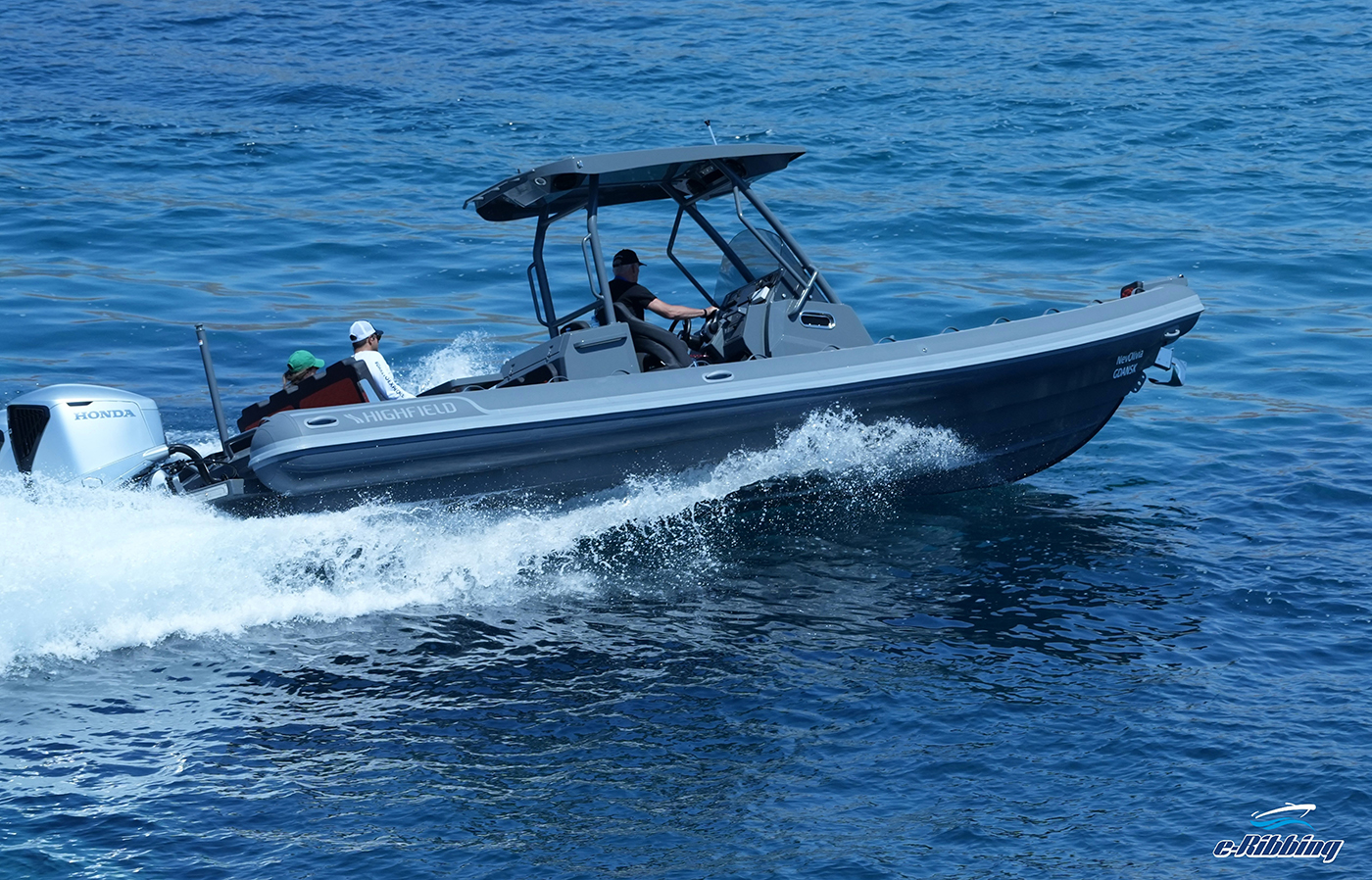
The Sport 900's overall behaviour throughout the sea trial gave me the impression that its hull would be capable of performing efficiently even with only one engine in operation. Wanting to verify this assumption in real-world conditions, I carried out a test that is particularly relevant for those who undertake long offshore passages or cruise far from organised marinas.
I shut down the port engine, tilted it completely clear of the water to eliminate any hydrodynamic drag, and continued the trial powered solely by the starboard outboard. Despite the substantial reduction in available horsepower, the Sport 900 had no difficulty getting onto the plane.
At 3,700 rpm, the boat maintained a steady cruising speed of 16.5 knots, a pace that would not only allow the safe continuation of a voyage but also provide a comfortable run to the nearest harbour or safe haven should the need arise. The helm retained its natural feel, while the hull's behaviour gave little indication that the boat was operating with only half of its available power.
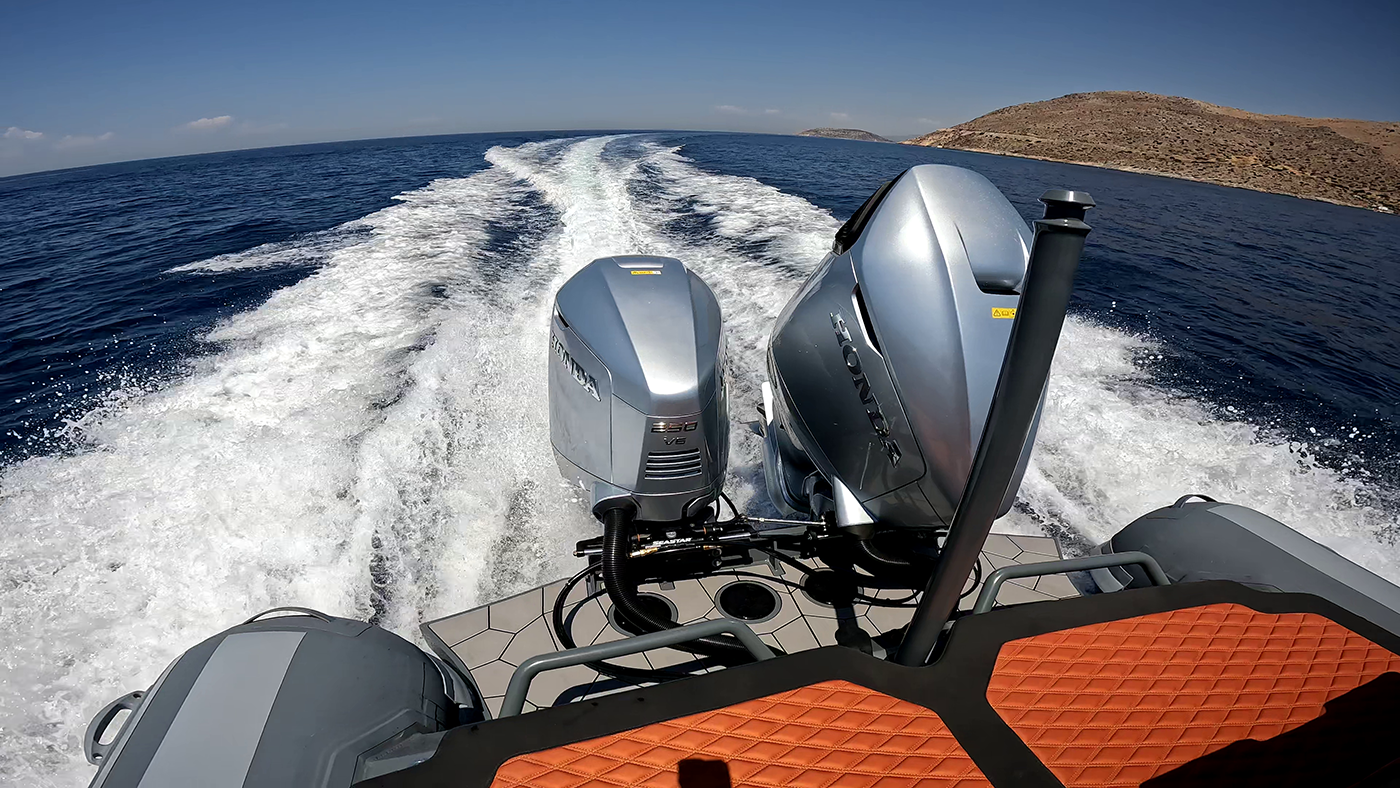
The results became even more impressive when we increased engine speed to 4,400 rpm. The Sport 900 accelerated smoothly and settled comfortably at 23 knots, a speed that could prove invaluable in a real emergency. In the event of an engine failure or any other unforeseen situation, the boat is still capable of carrying its crew safely and within a reasonable time to the nearest harbour, without being forced to continue at displacement speeds.
This test highlighted yet another advantage of the Highfield Sport 900's aluminium hull. Beyond its efficiency under normal operating conditions, it also offers a significant safety benefit, allowing the boat to maintain a practical planing speed even when running on a single engine. For owners who regularly undertake long coastal passages or offshore cruising, this capability provides an additional level of confidence and peace of mind.
…. keep Ribbing!
Official Distributor:
Riginos Yachts S.A.
27 Pergamou Street
16675 Glyfada, Greece
Tel.: +30 210 962 1274
E-mail: info@riginos.com