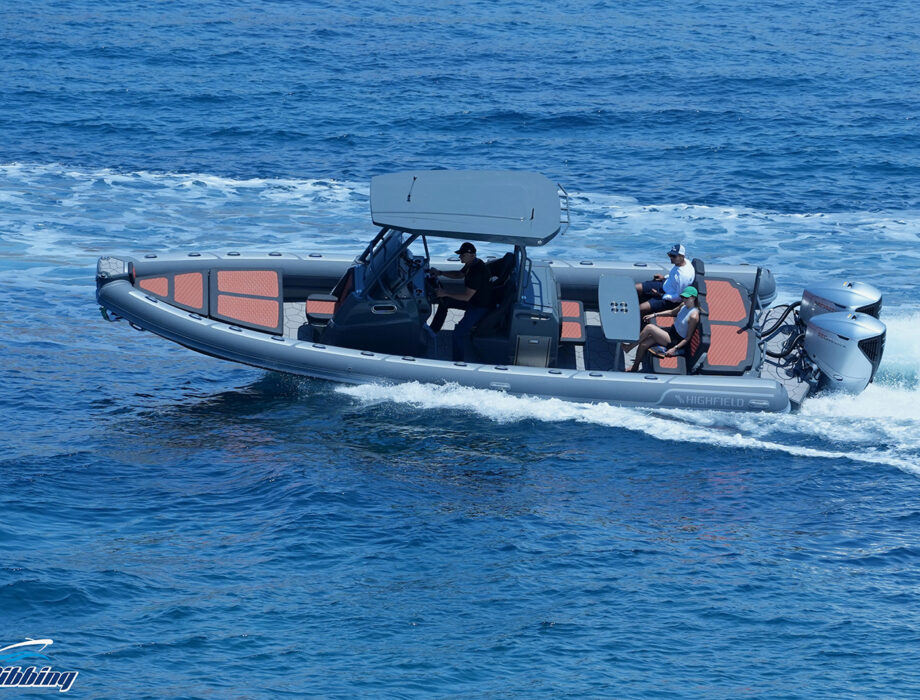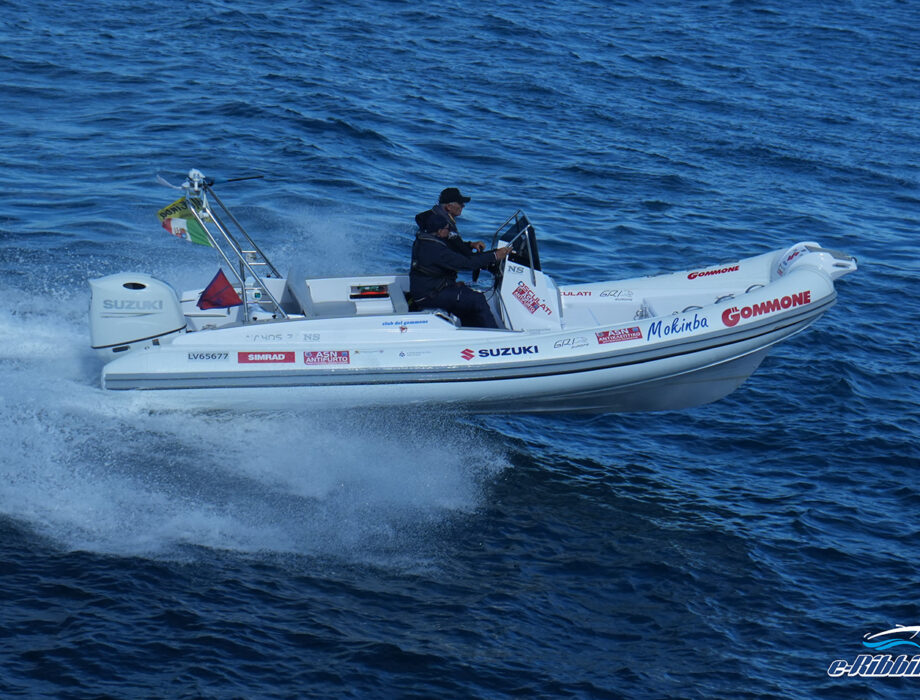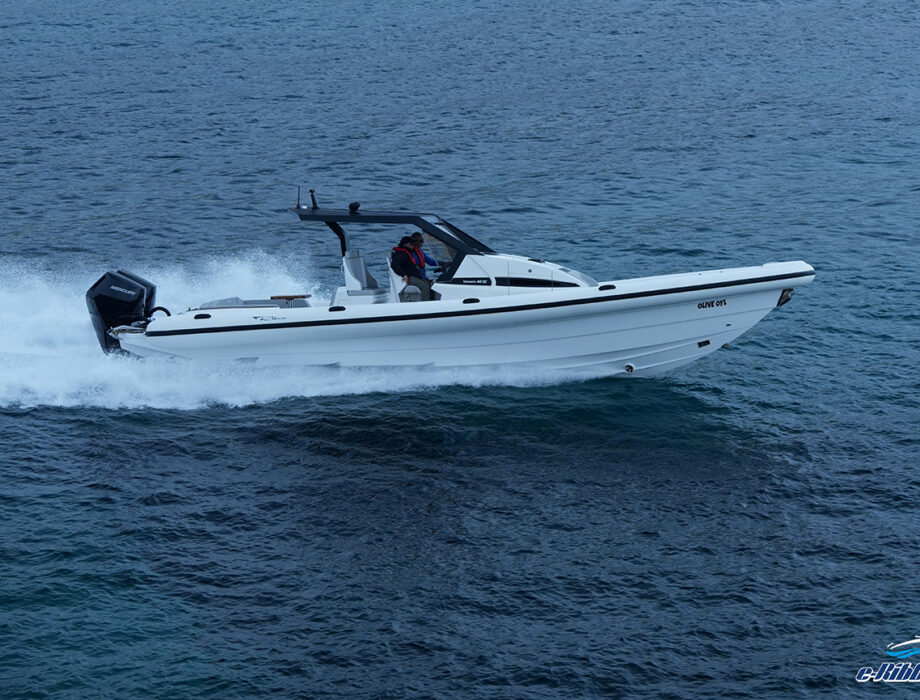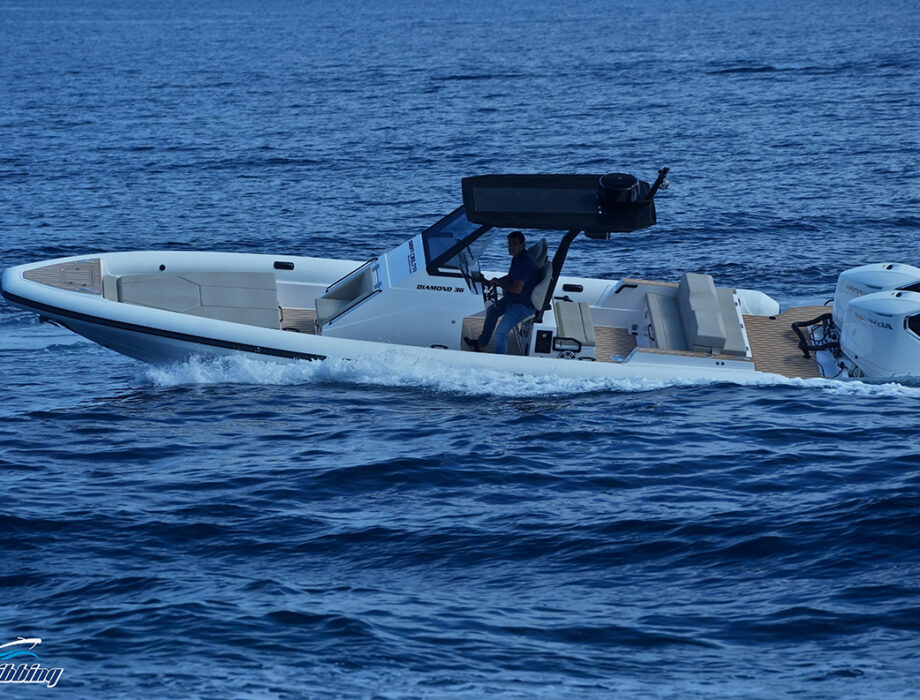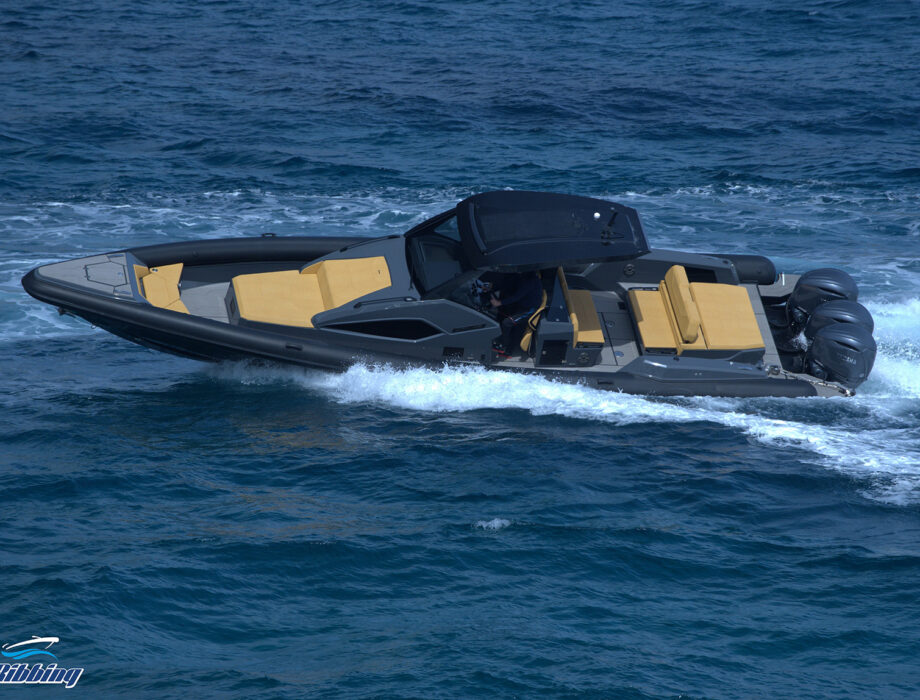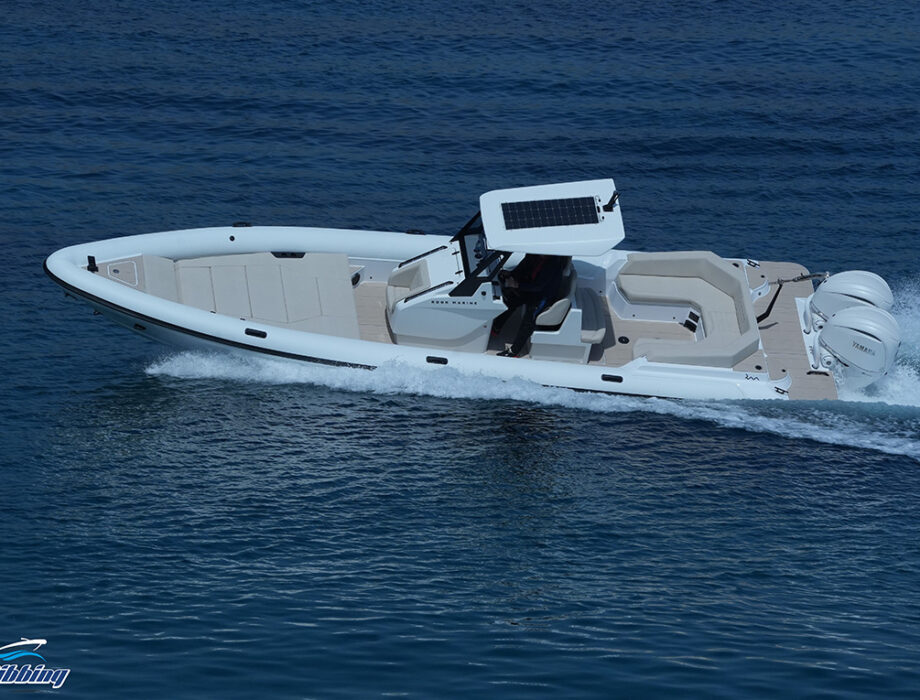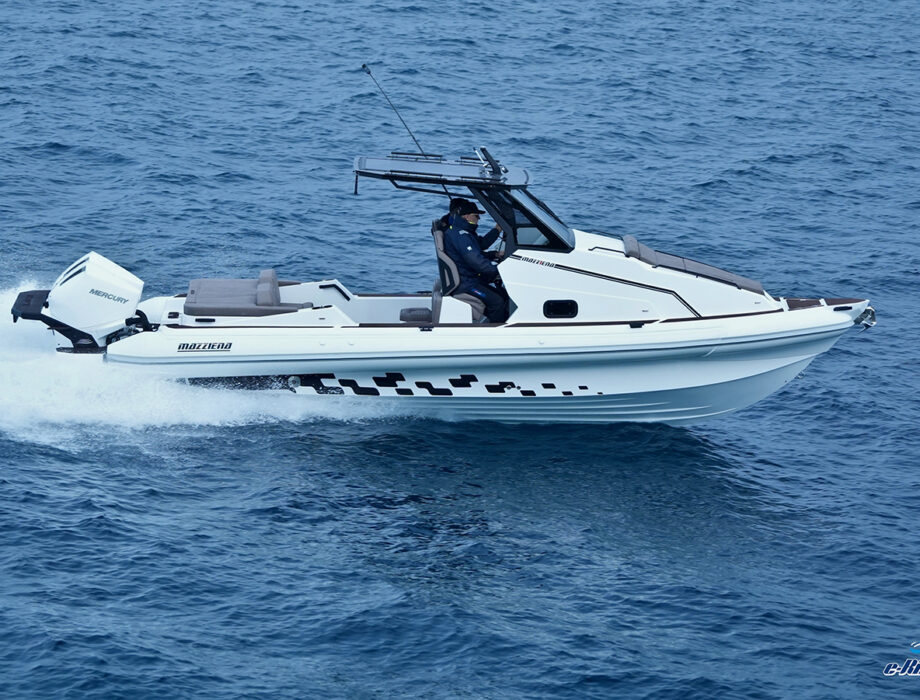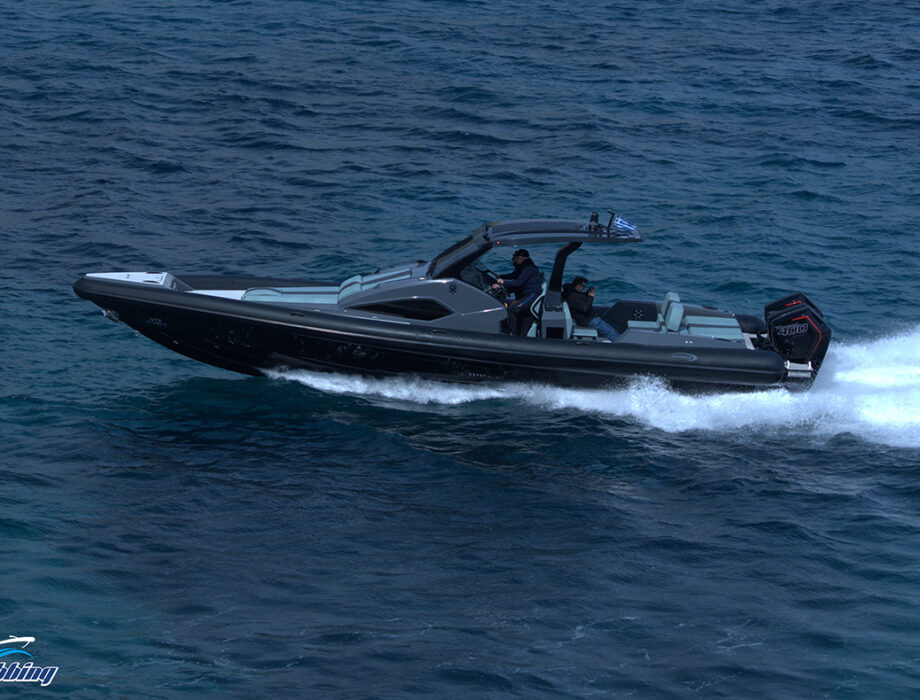
NJ Prince 27 Exclusive – DF300BMD Suzuki
OLR 40SRC – Twin 450hp XTO Yamahas
NJ Prince 27 Exclusive – DF300BMD Suzuki
OLR 40SRC – Twin 450hp XTO Yamahas


SALPA Soleil 42 - Twin V8 350hp Honda
Making Life Enjoyable On Board.
These were the very first words we wrote about Salpa Soleil 42 when we tested it during its debut at the Genoa Boat Show in 2019. We even described it back then as an outstanding Sport Utility RIB (SUR) that seamlessly blends quality, luxury, and performance.
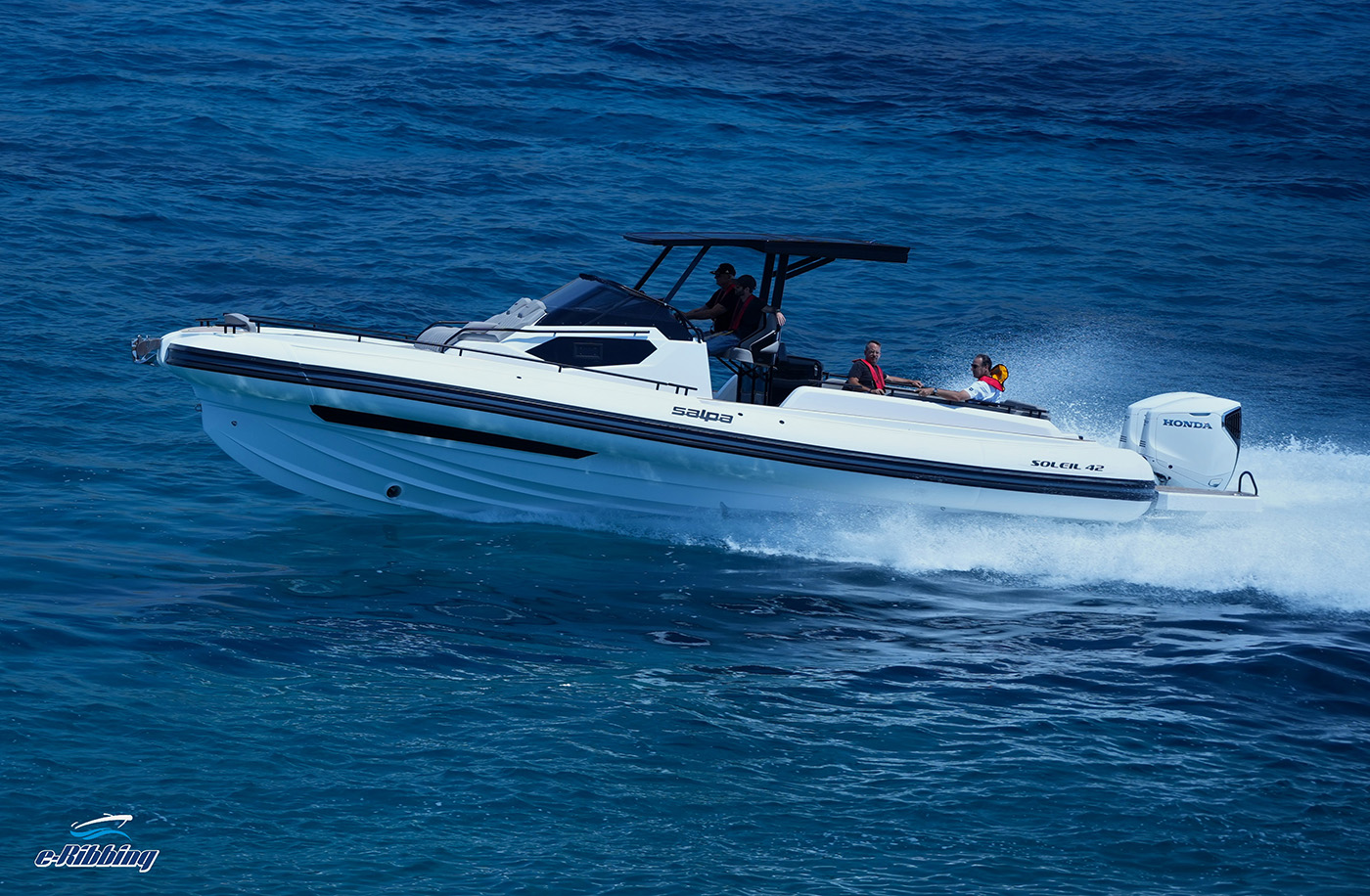
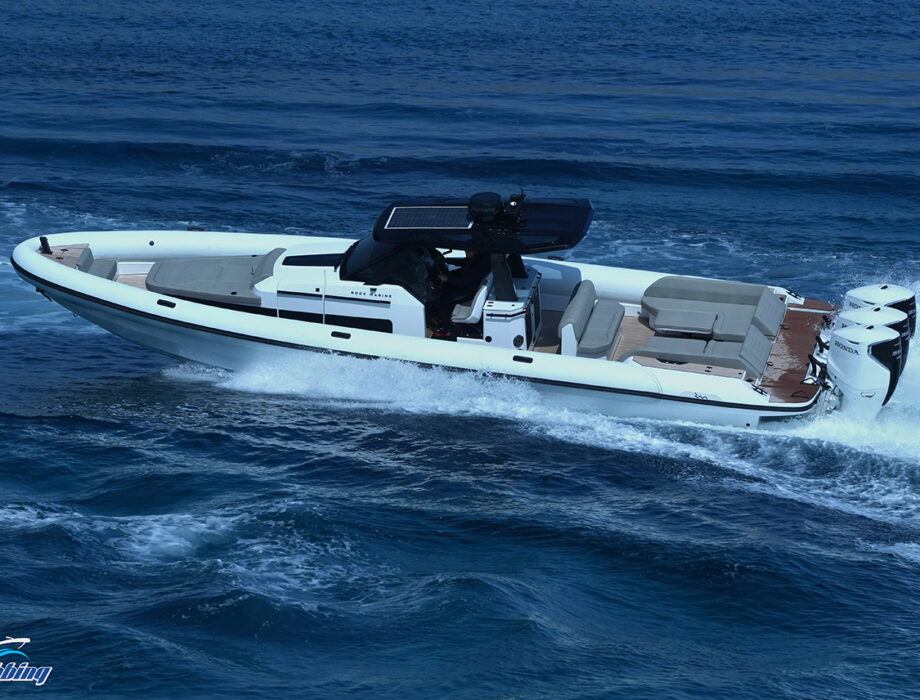
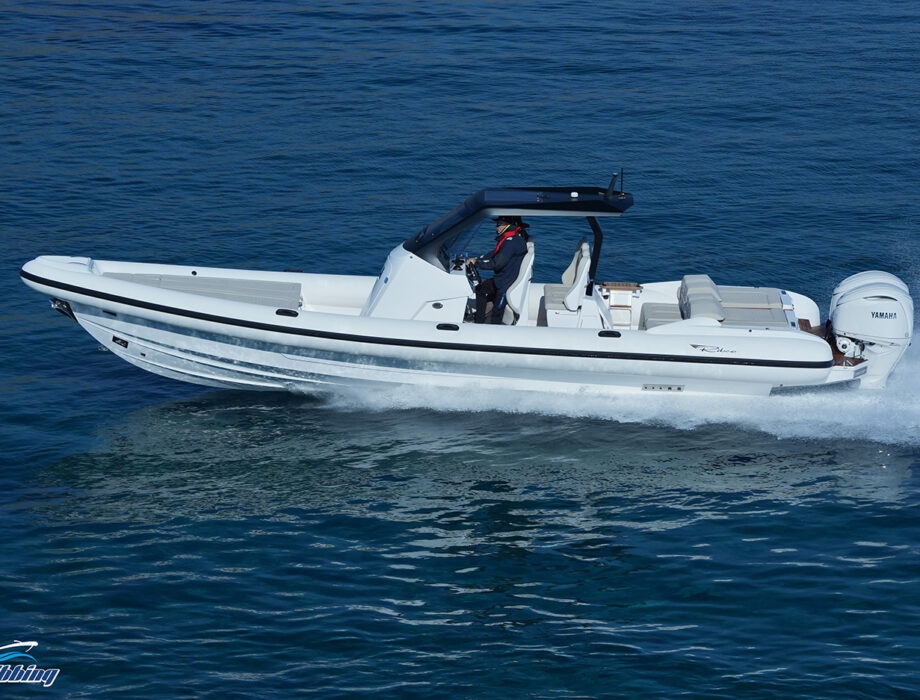
There is no doubt that Salpa Soleil 42 is a true Mega-RIB, instantly recognizable and distinctive even when approaching from a distance. Easy to handle and unexpectedly efficient, it embodies modern design at its finest in the category of large inflatable boats.
Both the deck and the interior spaces have been entirely designed by Salpa’s in-house technical team, with a clear emphasis on maximizing comfort and functionality. Every inch has been cleverly utilized, combining ergonomic solutions, practical layouts, and high-end finishes. The result is a RIB that offers a premium onboard living experience—whether you're heading out for a day trip or a longer voyage.
Designed by the renowned Adam Younger, the Soleil 42’s hull pairs offshore characteristics with exceptional stability and confidence at sea. It delivers a smooth and secure ride, even in rough conditions.
Below deck, Soleil 42 impresses with its well-thought-out interior layout: two double cabins, a fully equipped bathroom with a separate shower, and generous storage spaces create the atmosphere of a luxury suite at sea. Carefully planned natural and ambient lighting enhances the warmth and hospitality of the living spaces.
Salpa Soleil 42 is far more than just a means of transport—it transforms into a floating space of pleasure, relaxation, and exploration. Whether you’re at the helm or enjoying life on deck, Soleil 42 invites you to savor every moment in comfort, style, and luxury.
At Sea
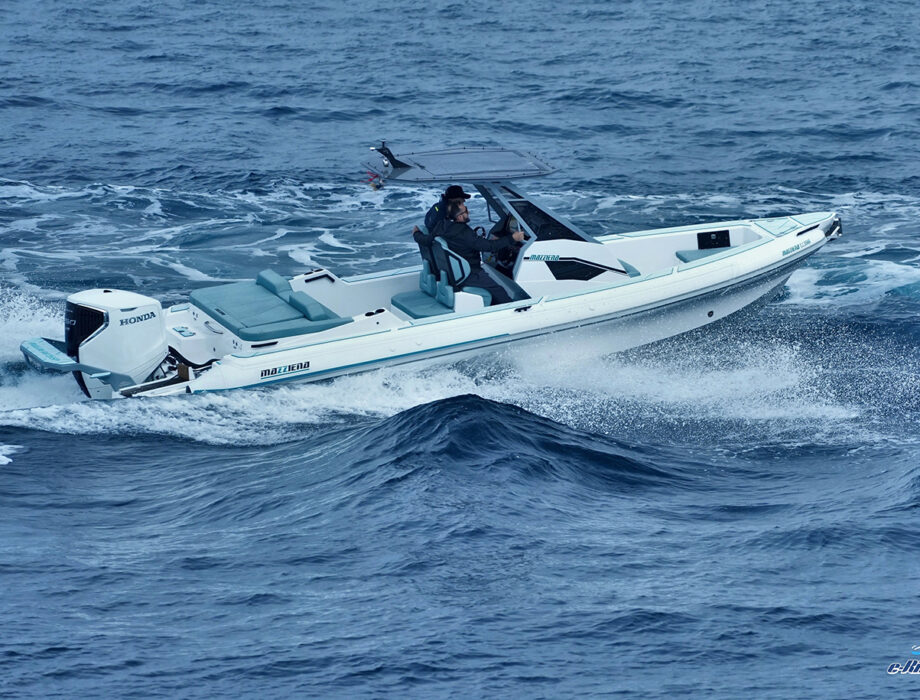
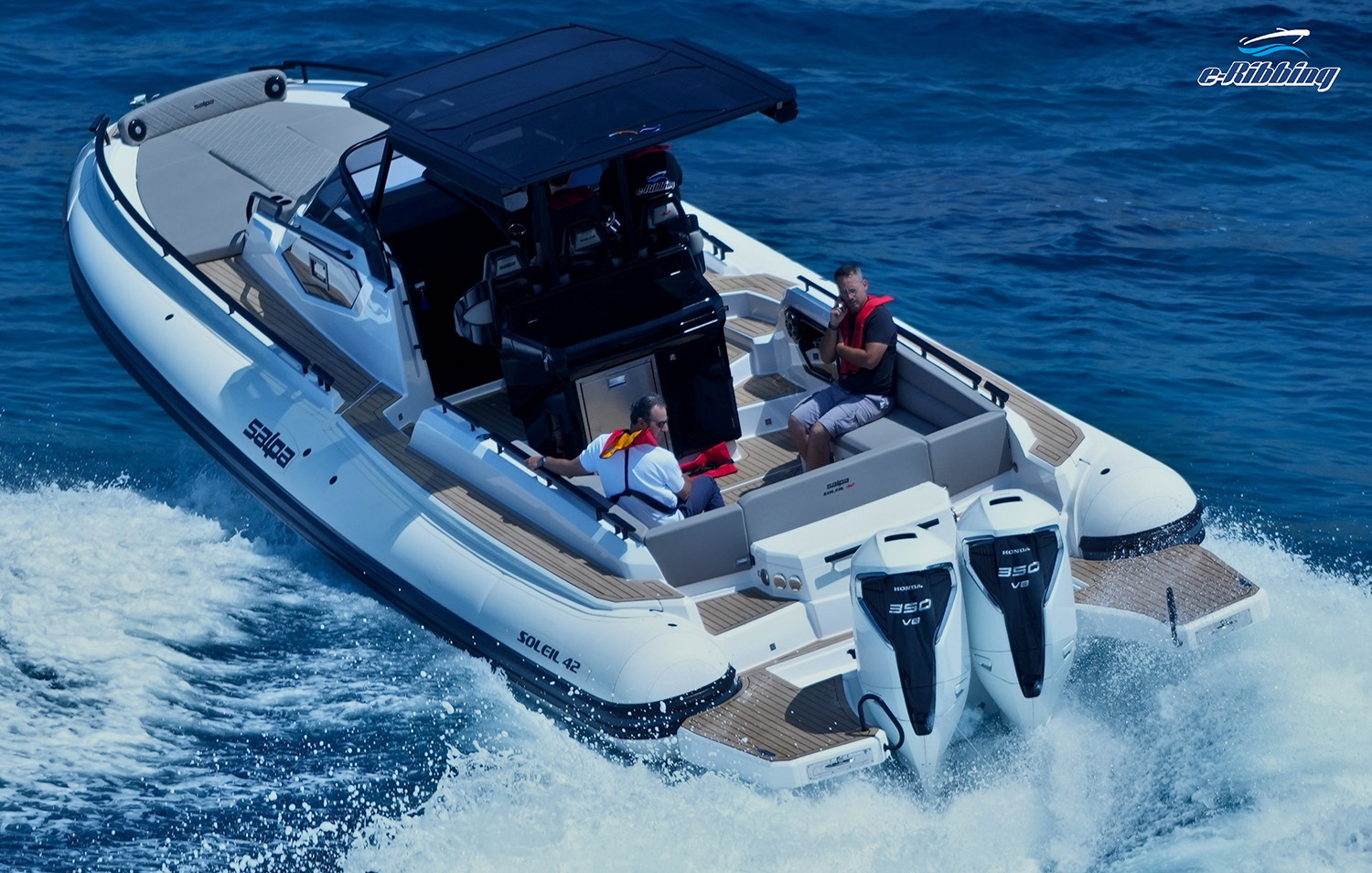
For this test, Soleil 42 was fitted with twin 350 hp Honda V8 engines, spinning 16” x 18” three-blade stainless steel propellers through gearboxes with a 1.79:1 reduction ratio.To be honest, I had some initial doubts about this setup—the otherwise mighty V8s looked a bit “small” to power a boat that, fully loaded with equipment, fuel, passengers, and engines, approached 6 tons in total weight.
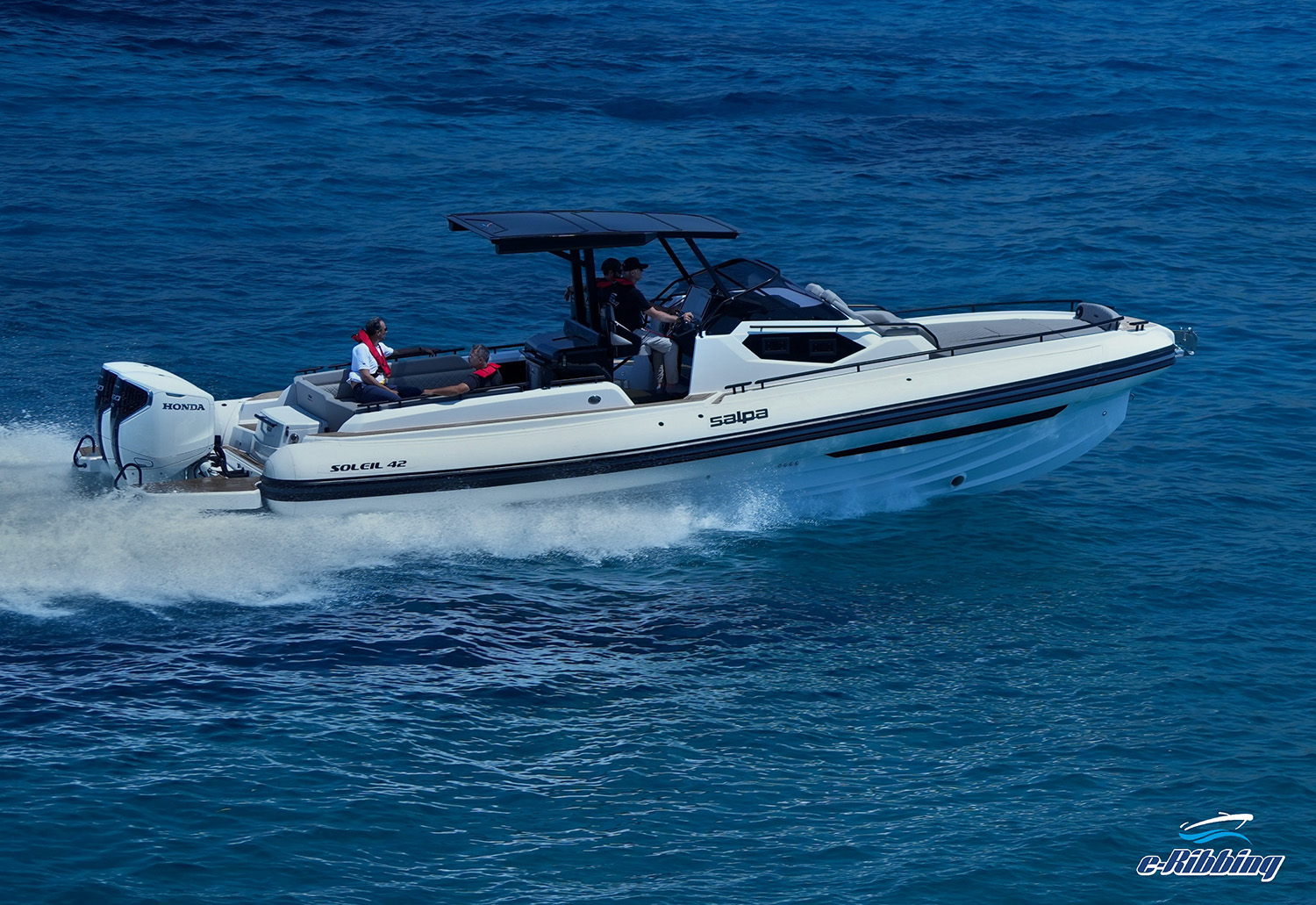
Yet, from the very first nautical miles, those doubts faded. The hull proved remarkably efficient, gliding respectably across the water and delivering solid performance figures—especially considering the horsepower and gear ratio of the Honda V8s.
During our test, there were six people onboard, along with 300 litters of fuel and the vessel's full cruising gear.
Soleil 42 was slow to get on plane, rising its bow for a few seconds before leveling out. It was standing on plane at 2,650 rpm, cruising at 13 knots and burning 4.4 liters per nautical mile.
It accelerated to 30 knots in 14 seconds and reached 40 knots in 22 seconds—figures that, while high, were fully expected and confirmed that Soleil 42 would benefit from more horsepower on the transom.
At 3,000 rpm, we achieved 16 knots, recording the best fuel economy at 3.7 L/NM.
At 3,500 rpm, speed rose to 19 knots with a consumption of 3.9 L/NM, and at 4,000 rpm, we cruised at 22 knots, burning 4.1 L/NM.
At wide open throttle (WOT), the engines reached 6,200 rpm, delivering a top speed of 46 knots and consuming 5.6 L/NM.
📊 You can find our full performance figures in the table below:
You can also view this detailed deck overview and a performance test with twin Yamaha 425 XTOs at the link below:
🔗 https://www.e-ribbing.com/el/salpa-soleil-42-twin-425hp-xto-yamahas
Performance Observations
Looking at the performance chart, it’s clear that slip percentages are quite high up to 4,500 rpm. This indicates that, in the lower and mid-range—where most cruising takes place—a significant amount of energy is lost, due to limited stern lift.
After 4,500 rpm, however, the wetted surface area and hydrodynamic resistance decrease, resulting in a noticeable drop in slip and a clear improvement in throttle response.
In summary, despite the relatively modest horsepower, this setup performs respectably well. The propeller pitch proves appropriate, as it allows the boat to carry additional load while remaining close to the engines' optimal rpm range—an important factor for smooth operation and engine longevity.