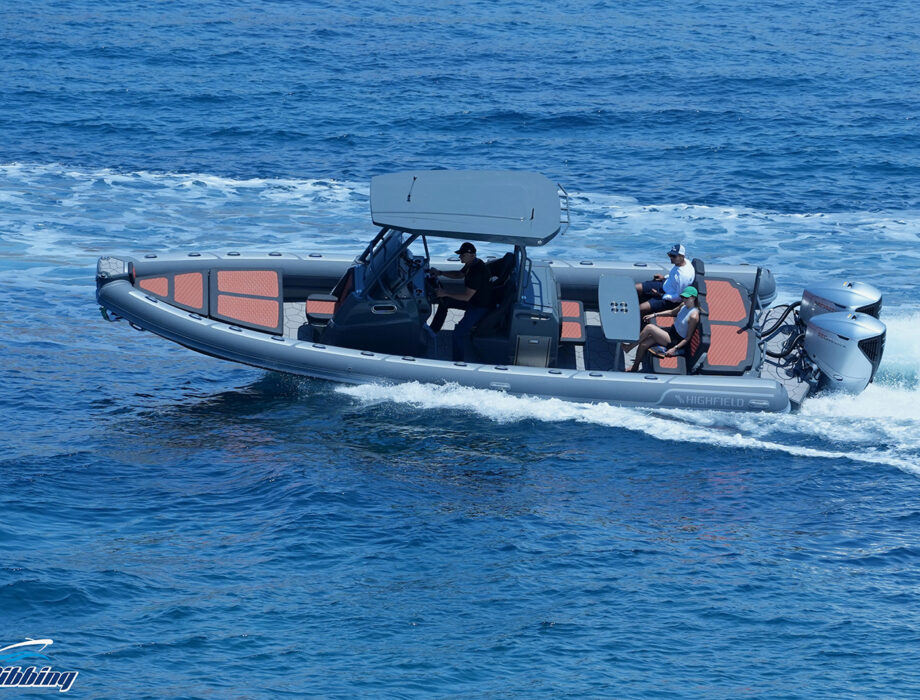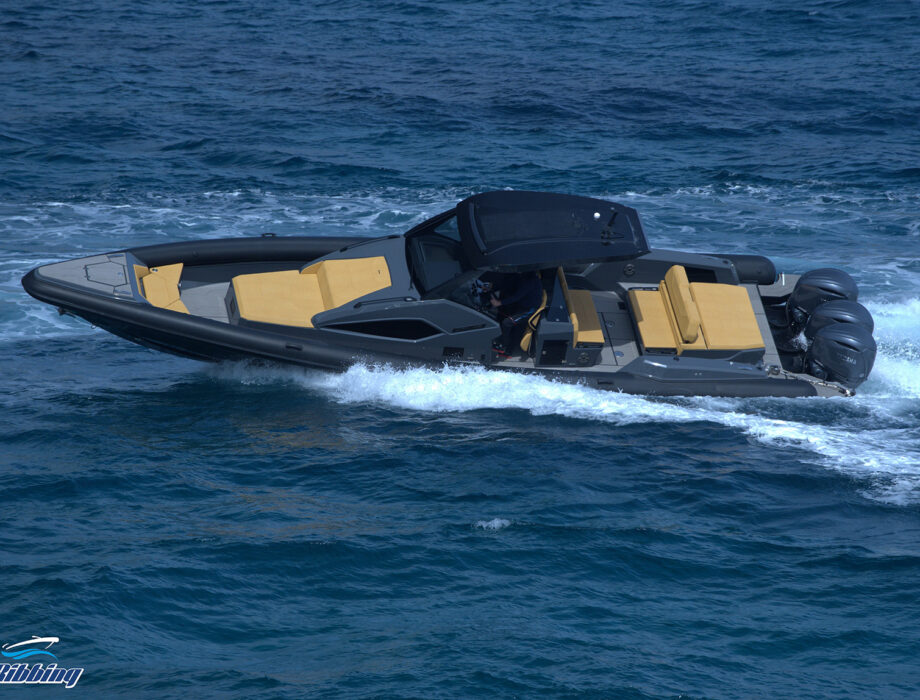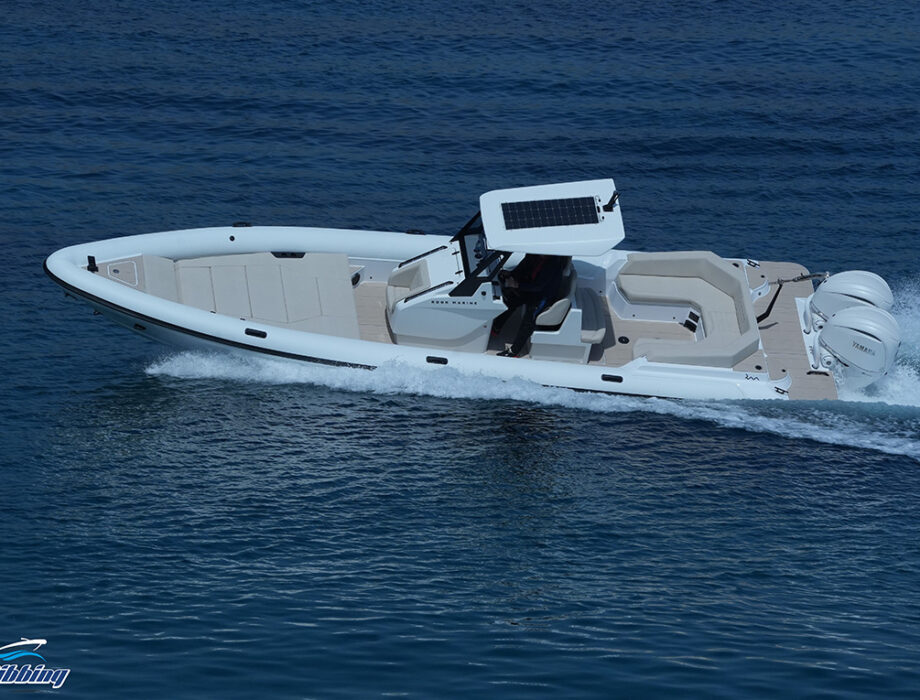
Seafighter SFR 42 – Triple Yamaha 350 V6
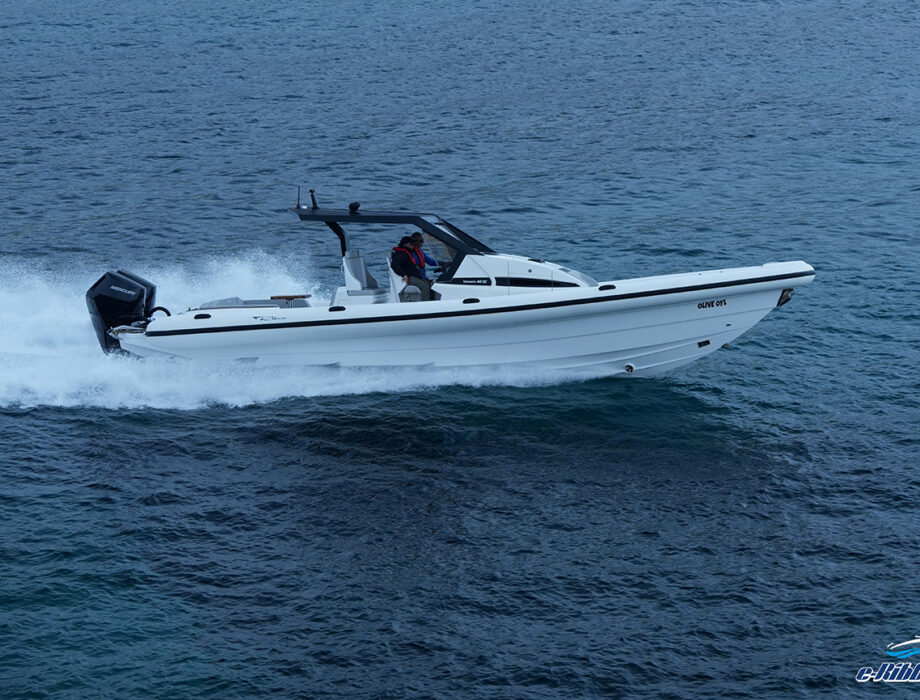
RIBCO Venom 40SC – 2x425hp Mercury V10
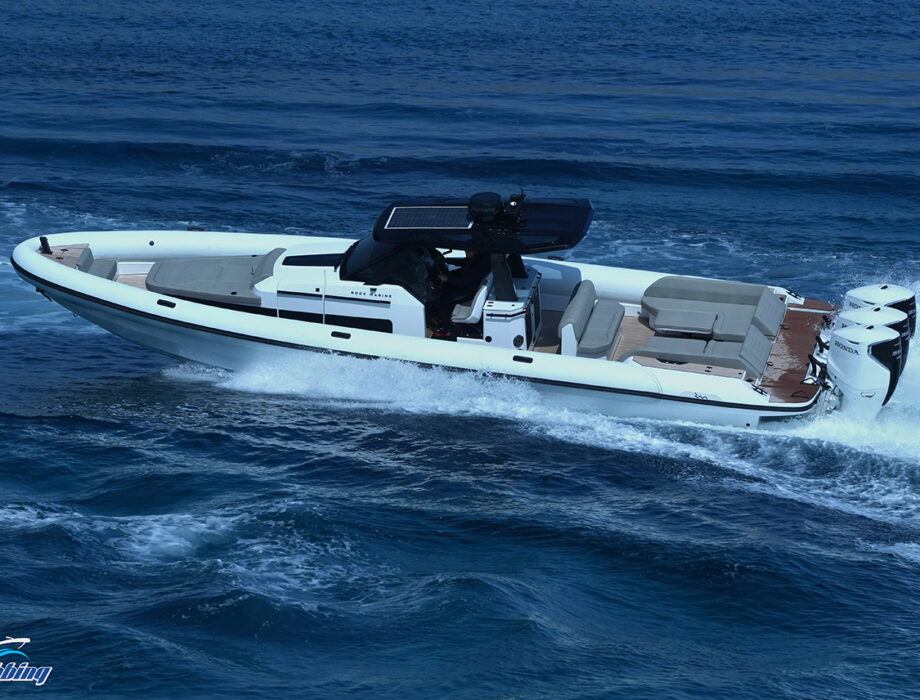
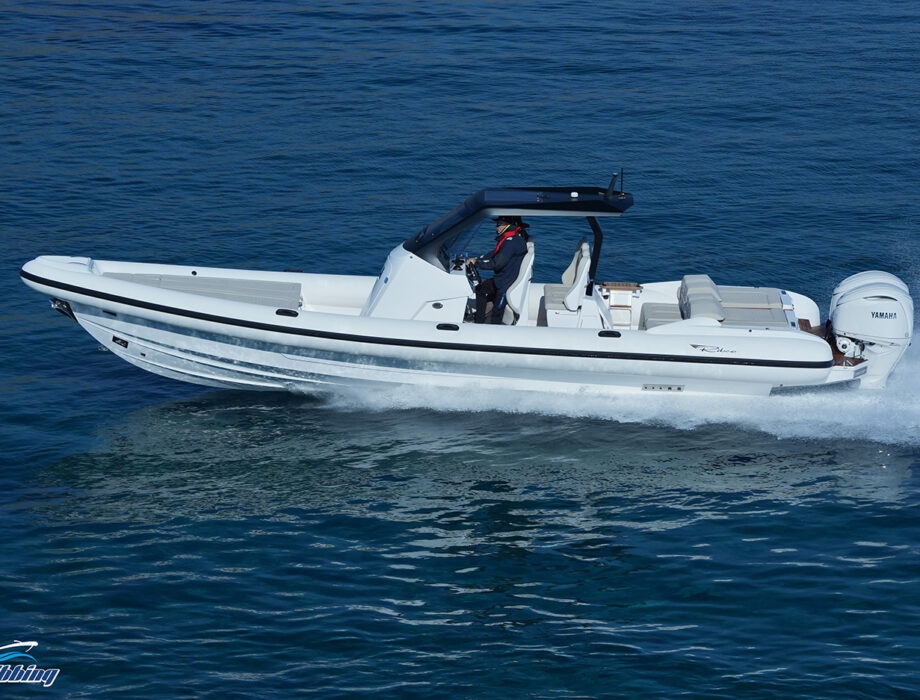
Seafighter SFR 42 – Triple Yamaha 350 V6
RIBCO Venom 40SC – 2x425hp Mercury V10


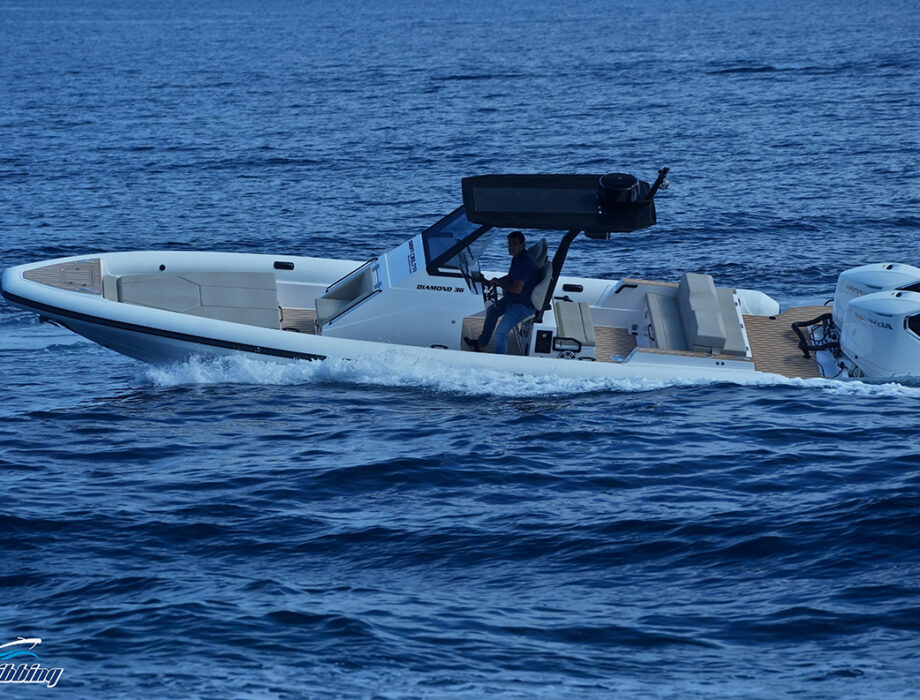
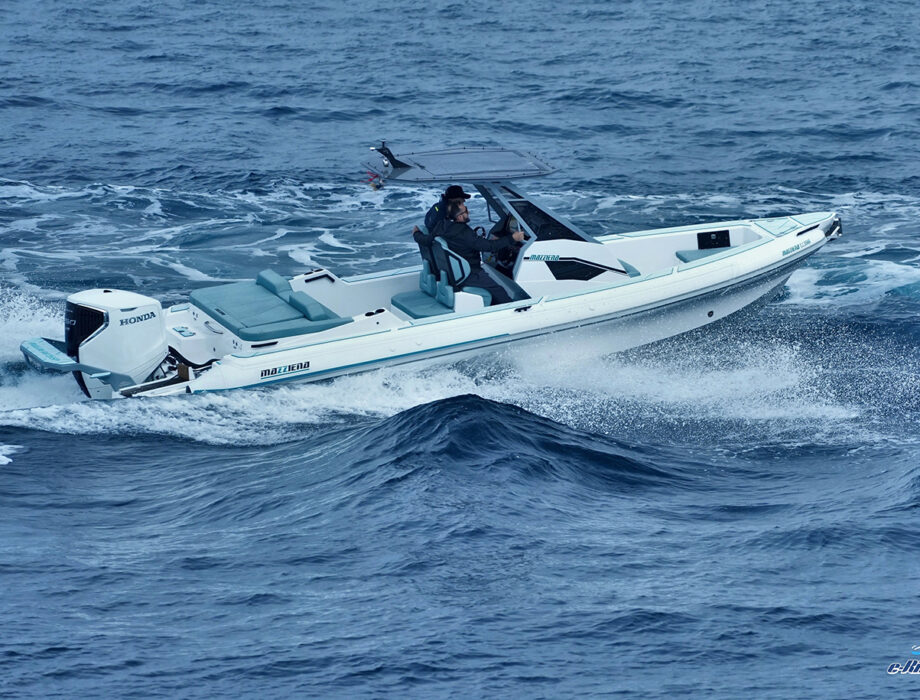
SEADELTA Diamond 36 – Twin Honda BF350 V8
Seadelta is a new Greek presence with a clear philosophy.
The Greek RIB market has for many years been one of the most active and competitive sectors of the domestic boatbuilding industry. In an environment where customer expectations continue to rise and construction quality is now taken for granted, creating a new company is no easy task. It requires experience, know-how, a clear philosophy and, above all, people who truly understand the sea and the needs of those who spend their daily lives on it.
This is precisely the philosophy behind the new venture of Seadelta, a company that may have appeared only recently in the boatbuilding sector, but is backed by people with many years of experience in the sales, technical support and repair of inflatable boats. Their contact with dozens of different models and constructions over the years has given them a clear understanding of both the strengths and weaknesses commonly encountered in the everyday use of a RIB.
The origins of Seadelta can essentially be traced back to 2022, when the company's team collaborated with a naval architect who had already designed several smaller hulls. From that point onward, the decision was made to move from technical support and repairs into boatbuilding itself. The first steps were taken in a highly organized manner, with brand-new moulds being created from scratch for four-, five- and six-metre models, forming the basis of the shipyard's initial production activity.
The first production boat appeared approximately three years ago, marking Seadelta's official entry into the inflatable boat manufacturing sector. Since then, the company's development has been steady and methodical, culminating in the presentation of its new 36-foot model at the Boat & Fishing Show in March 2026 - a boat that effectively represented the company's first major public appearance in the large performance RIB category.
Seadelta's philosophy is based on a vertically integrated production approach, as nearly all construction work is carried out within the shipyard itself. This allows the company to maintain direct control over build quality and attention to detail in the final product. As the team itself emphasizes, quality construction is not an option but a one-way road. Their objective is to build boats that exceed the market average, both in terms of finish and overall construction philosophy.
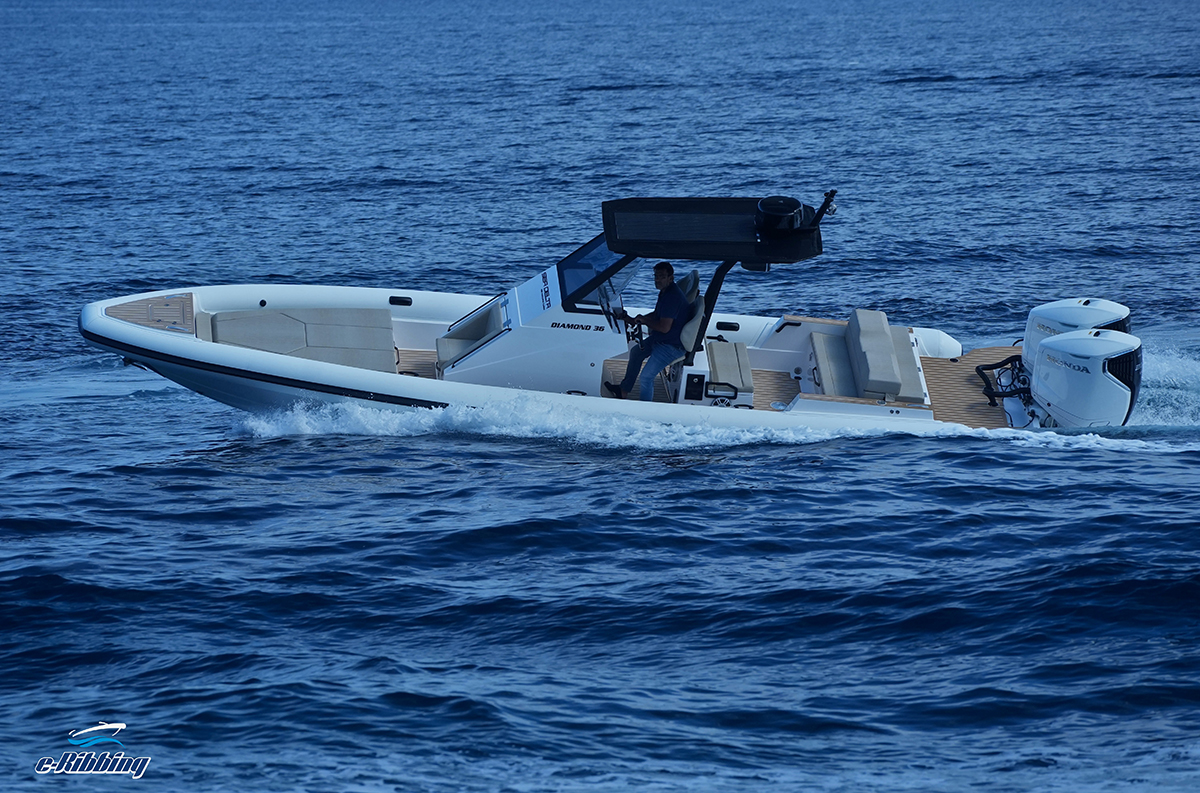
Particular interest is generated by the company's new 36-footer, whose sea trial we present for the first time on e-Ribbing. It is a 10.70-metre boat designed to serve both private and professional applications.
Its hull follows the "Great White" philosophy, featuring 24 degrees of deadrise at the transom and an active 97-centimetre bracket with a slight negative angle. The bracket forms an integral part of the hull and is moulded directly as one piece, without the use of additional bolt-on extensions.
Our first encounter with Seadelta and its new model suggests that this is a company seeking to establish a strong presence in a particularly demanding category, basing its market entry not on impressive promises but on a serious and well-organized construction approach.
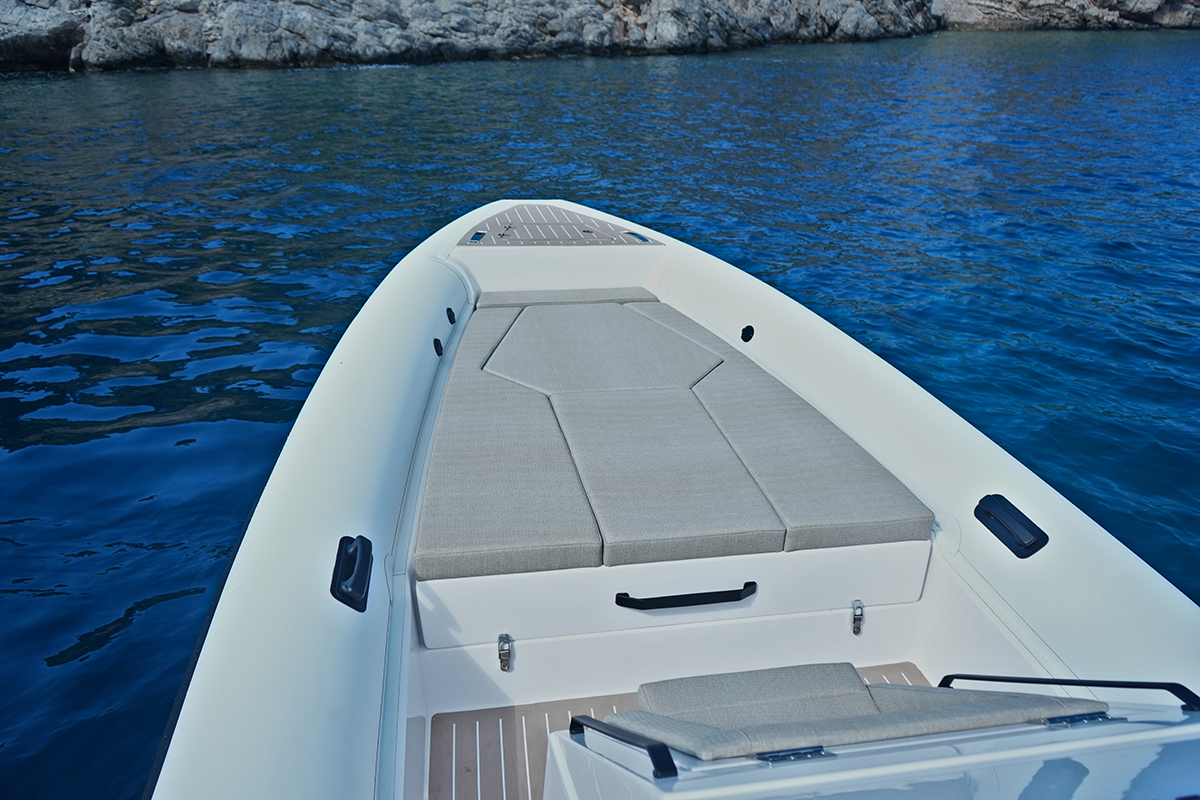
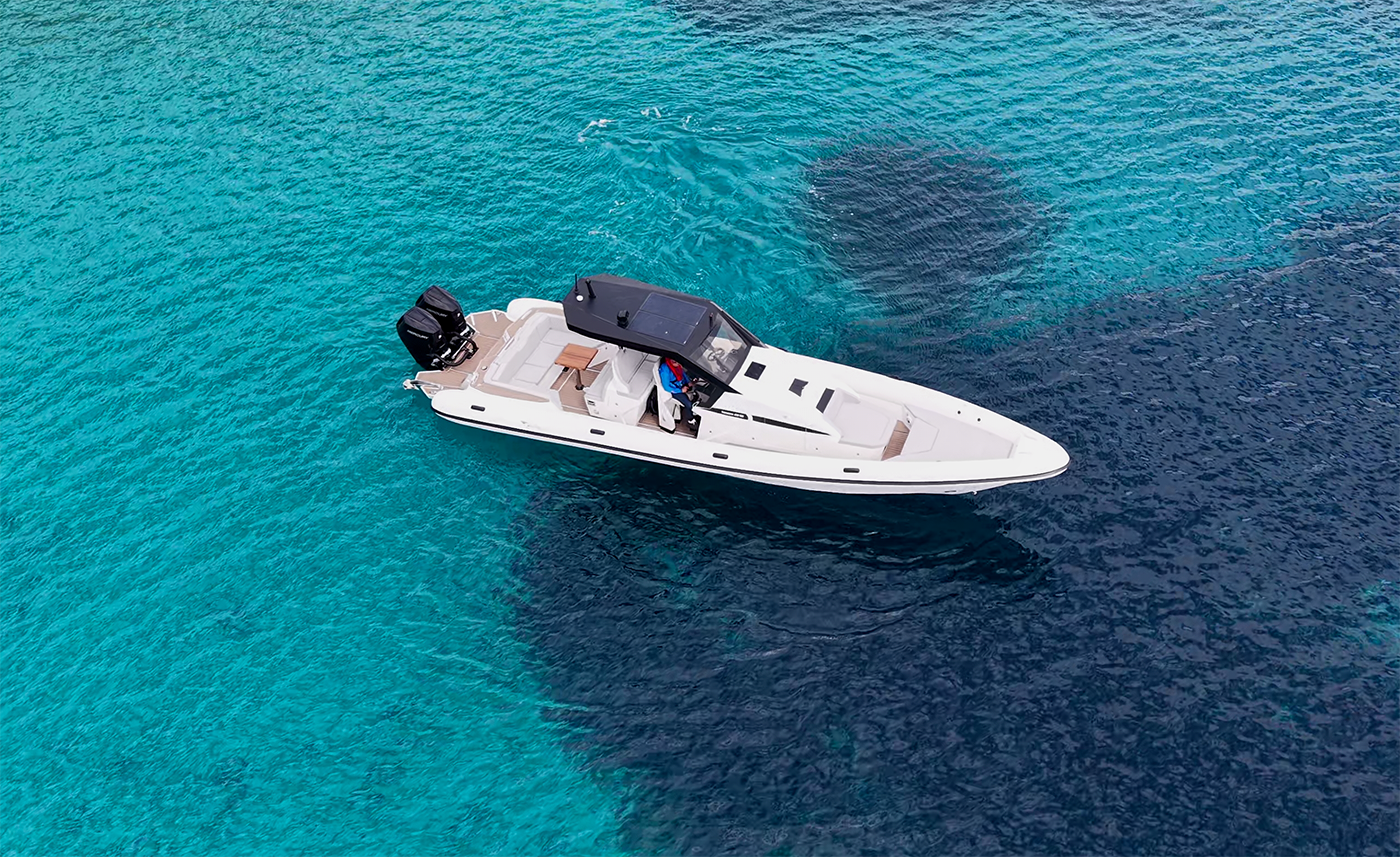
Αt the bow of the Diamond 36, a particularly spacious relaxation area dominates the forward section of the deck, providing an ideal space for sunbathing or unwinding at sea. The large sunbed surface has been designed to comfortably accommodate several passengers, transforming the bow into one of the most welcoming areas of the boat during a day trip.
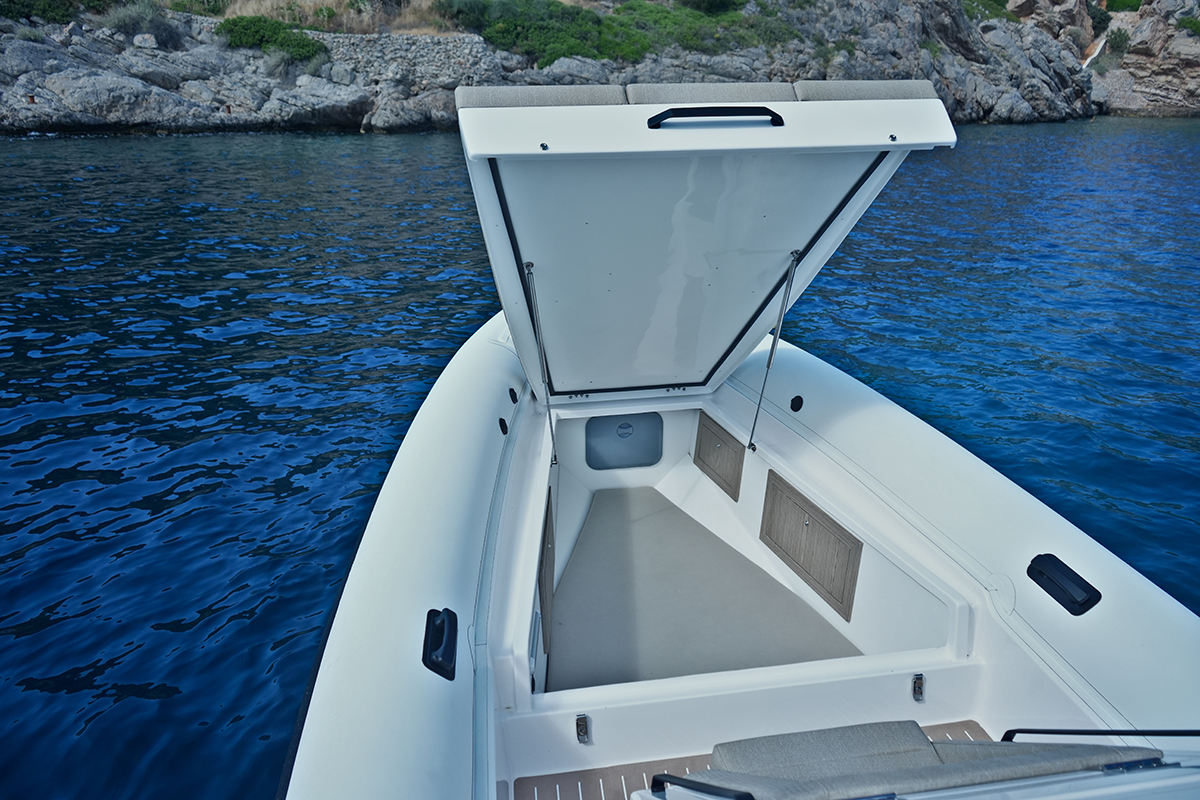
Beneath this raised platform lies a practical tent-style cabin space, sufficient to accommodate two adults. It is a protected area that can be used both for daytime relaxation and for short overnight stays onboard, adding an extra level of practicality to the boat.
At the forward end of the bow, the large GRP hard nose immediately stands out. Positioned at the same level as the tubes, it creates a unified and highly harmonious design line. This arrangement not only enhances the boat's aesthetic balance but also significantly improves boarding and disembarking from the bow, particularly when moored alongside piers.
At the top of the hard nose, a discreetly integrated hatch provides direct and easy access to the anchor locker. The anchor fits perfectly within the stainless-steel bow assembly, blending seamlessly with the boat's lines and creating a particularly clean and refined visual result. It is a detail that reveals the importance placed not only on functionality but also on overall construction quality and finish aboard the Diamond 36.
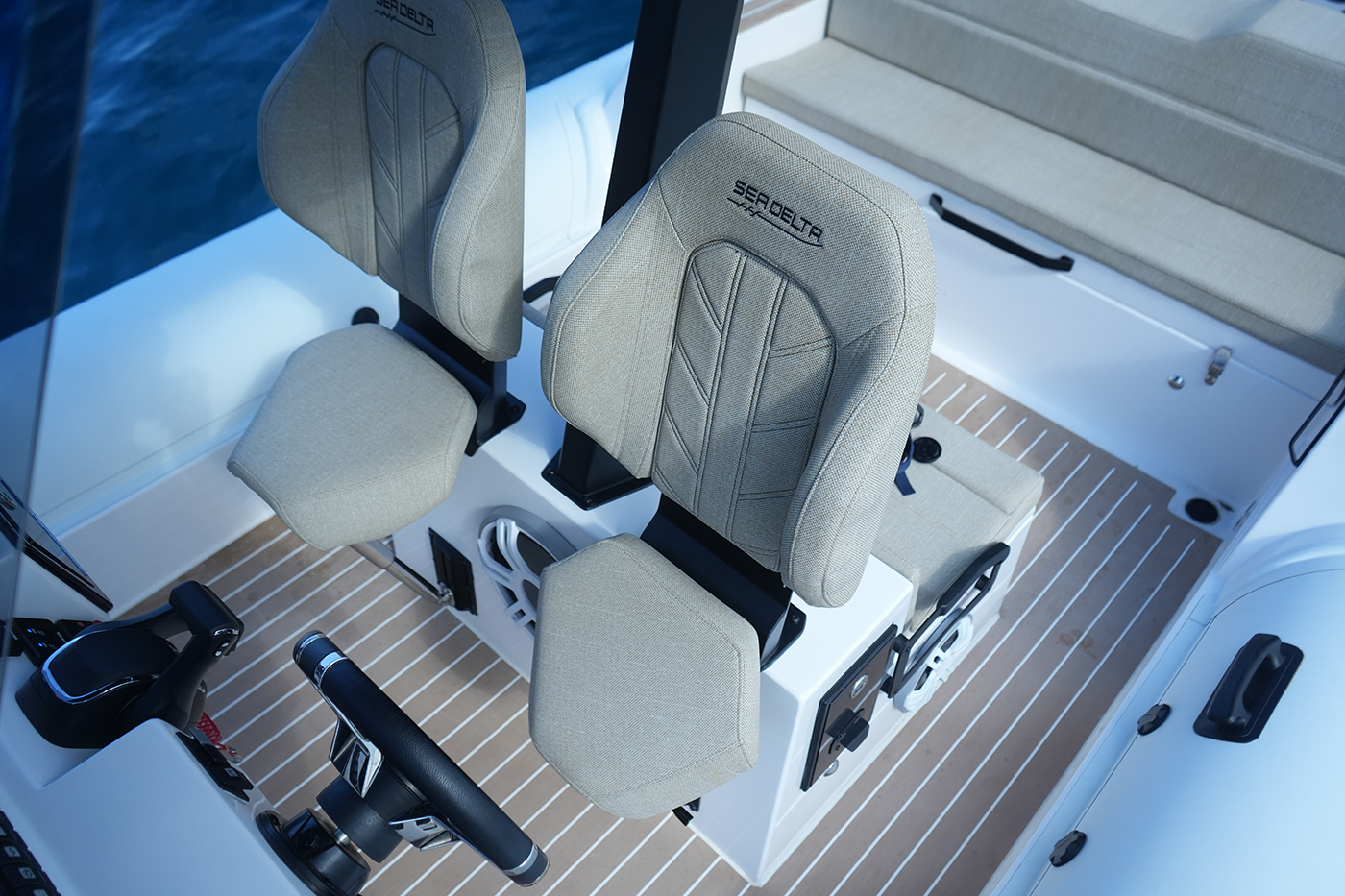
The Diamond 36's console is positioned centrally on the deck, creating two reasonably spacious side walkways that allow easy and safe movement from stern to bow.
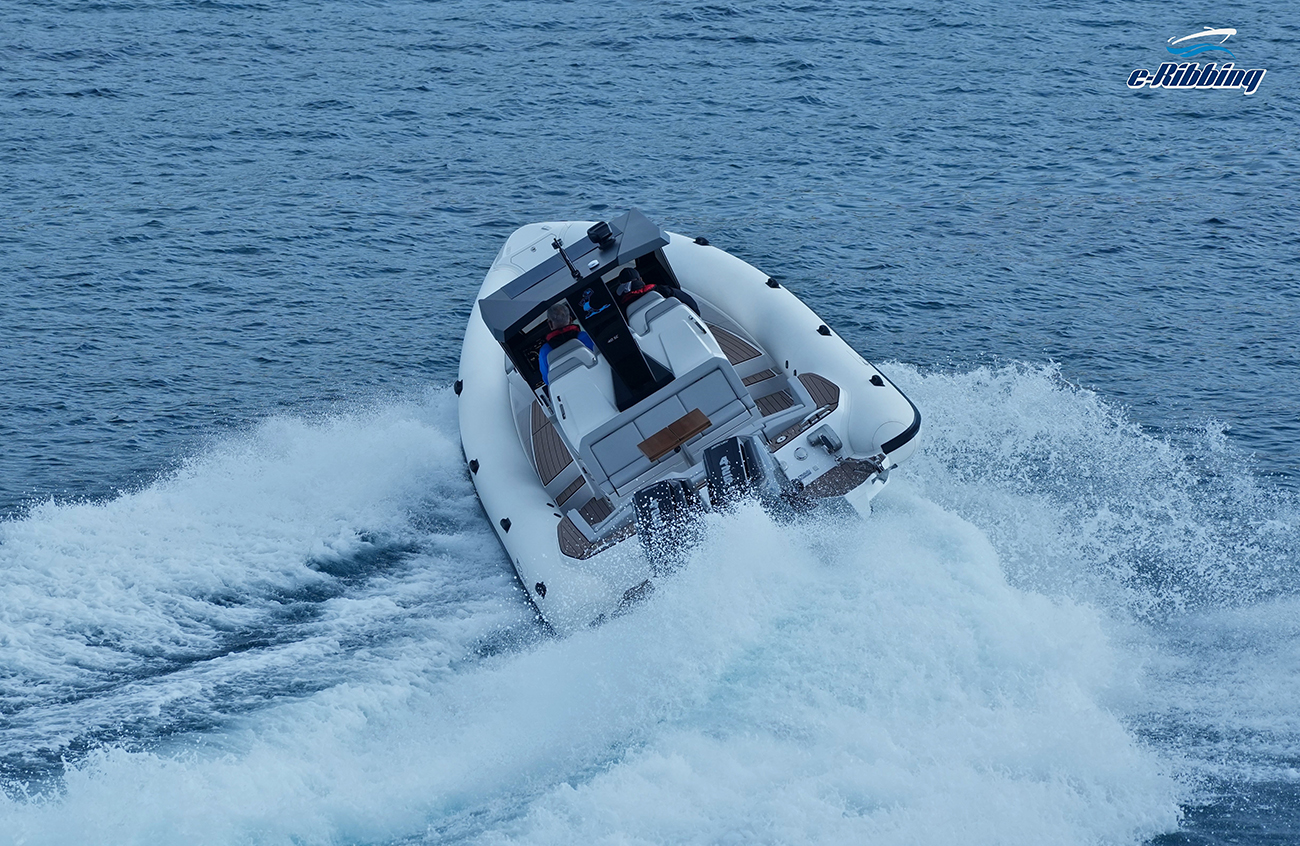
At the centre of the cockpit stand the helm and co-pilot bucket seats, mounted on a robust GRP base. Their design provides excellent lateral support, keeping the body firmly in place even when cruising at higher speeds or in more demanding sea conditions. These are the kind of seats that make you feel connected to the boat and allow you to enjoy the driving experience even more.
Directly behind the helm station is a two-person bench seat facing aft, seamlessly integrated into the stern lounge area, increasing seating capacity and enhancing the social character of the space.
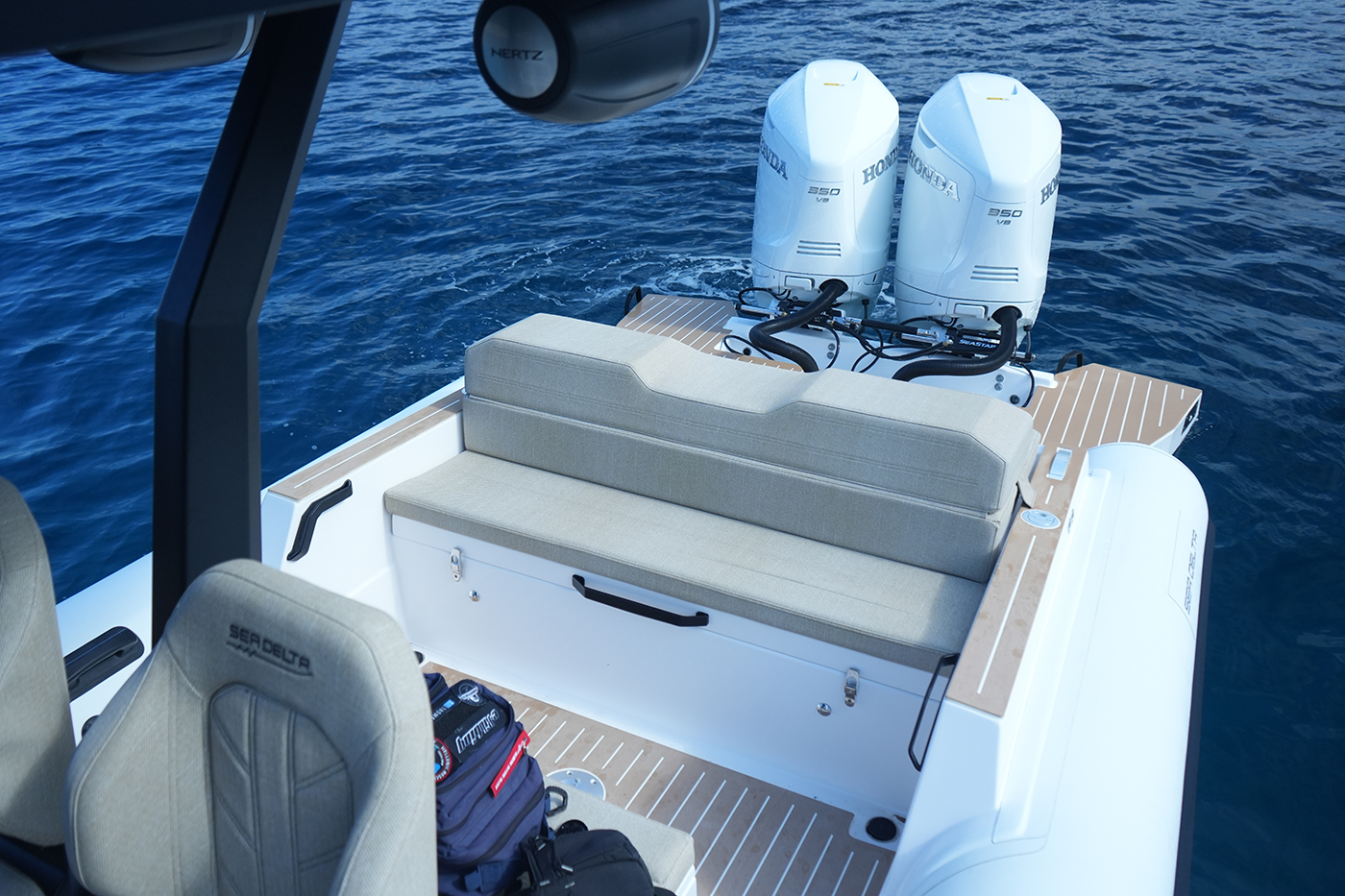
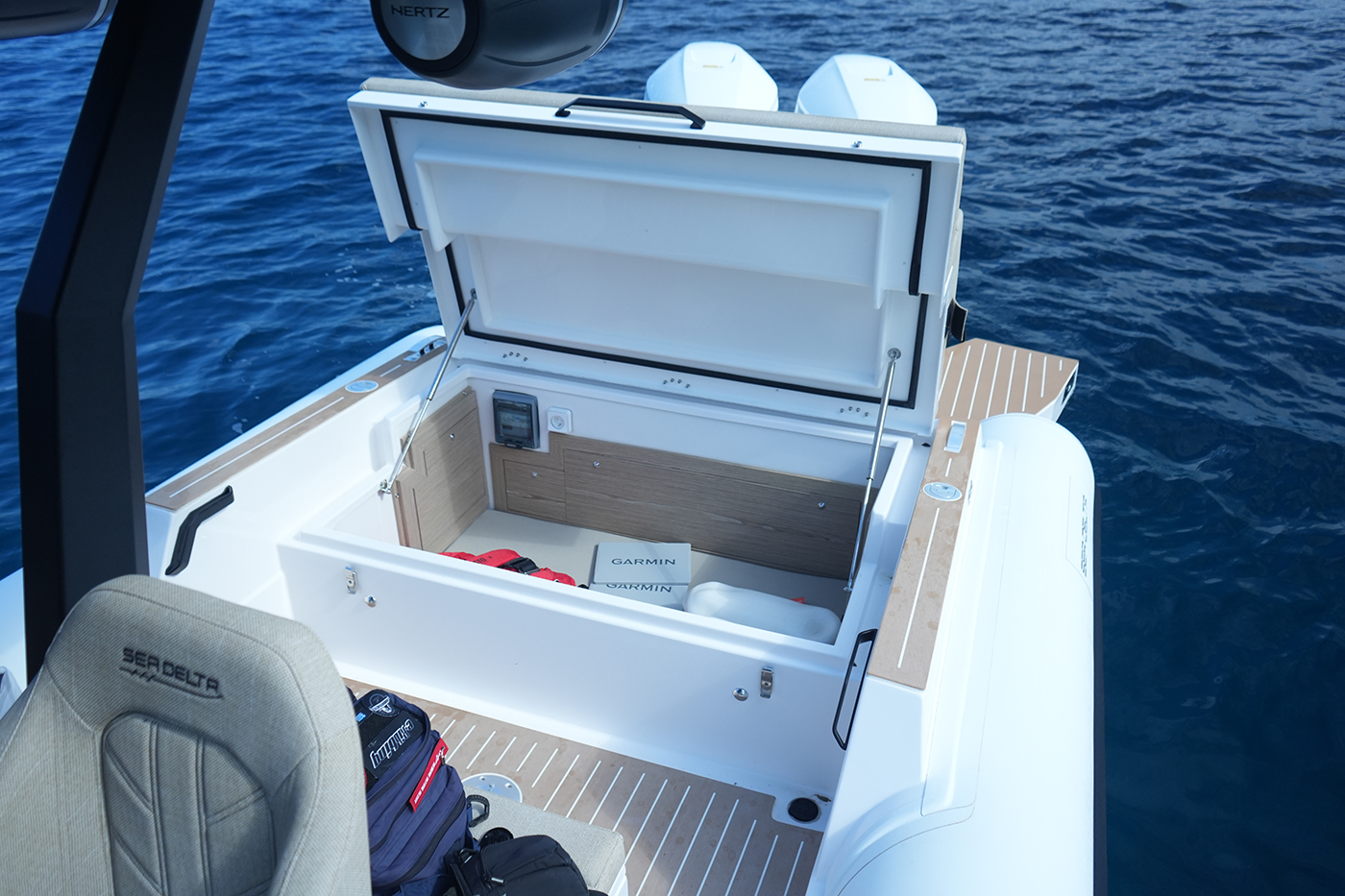
At the stern, a large four-person sofa is fitted, whose backrest can be easily raised to transform the area into a comfortable sunbathing and relaxation bed. In this way, the aft section of the boat is transformed into a welcoming relaxation area, ideal for enjoying time at anchor.
Further aft, around the engine area, extends a large flat deck surface that provides a clean and functional space for every activity at sea. Access to the water is easy and safe, while the overall layout allows passengers to move comfortably around the aft section, whether for a quick swim or for relaxing just a few centimetres above sea level.
At Sea
The Diamond 36 was fitted with twin Honda 350hp outboard engines mounted on its transom. Their gearcases, featuring a 1.79:1 gear ratio, were turning Honda three-blade propellers measuring 16'' x 21''. A total output of 700 horsepower which, at first glance, appeared perfectly suited to the boat's character.
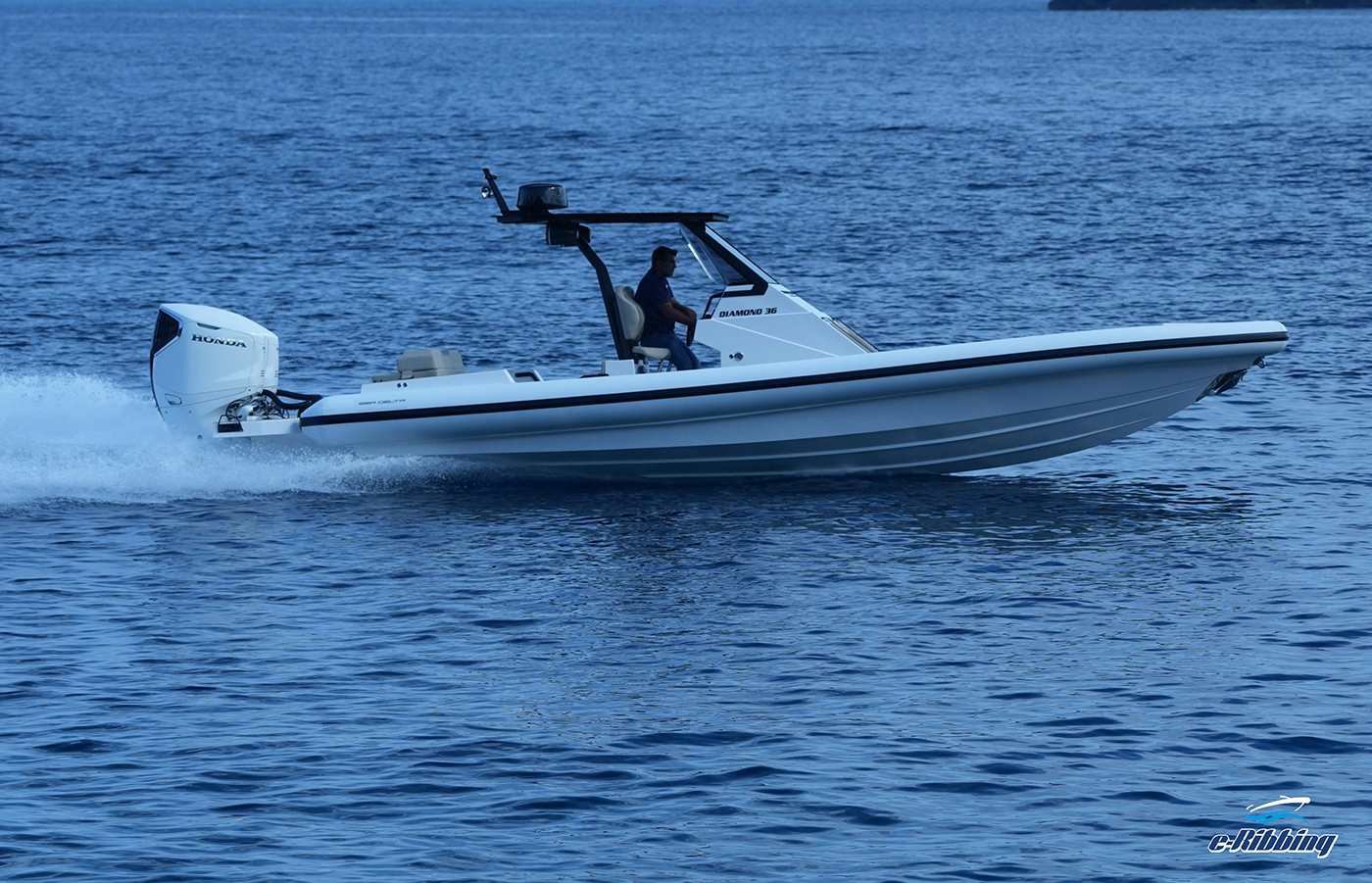
Without any previous experience of this particular engine-propeller combination - and without any benchmark regarding its behavior - we headed offshore to evaluate in real conditions how the Diamond 36's hull responded to the 700 horsepower hanging on its transom and to assess the overall performance of this setup at sea.
From the very first minutes of the test it became clear that the boat possesses a remarkably balanced yet aggressive character. The hull appeared to read the water correctly, absorbing our landings softly and conveying a reassuring sense of confidence and control to the helmsman.
We were particularly impressed by its handling precision and comfort at cruising speeds. The boat remained predictable, while the hull's soft cushioning created that distinctive sensation of the boat gliding over the water without tiring either crew or helmsman.
This is exactly the kind of behaviour one particularly appreciates in a large performance RIB, especially when the hours behind the wheel begin to accumulate and ride quality becomes more important than performance figures alone.
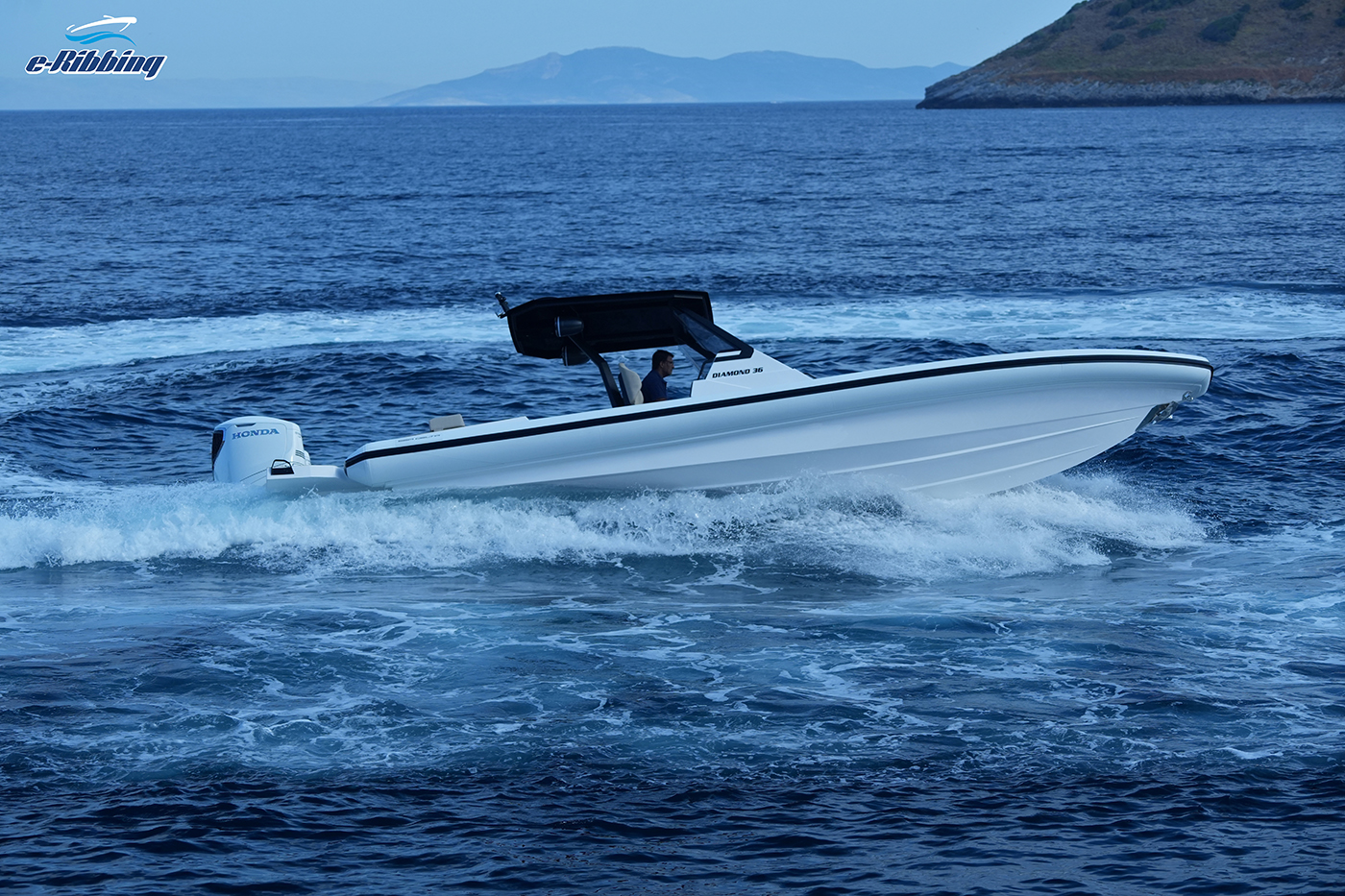
With approximately 500 litres of fuel onboard, two crew members and all the boat's basic equipment, the Diamond 36 demonstrated from the outset that it could handle the substantial torque reserves of Honda's powerful engines without difficulty.
The boat was maintaining its planing from as low as 2,000 rpm, travelling at approximately 11 knots, demonstrating the hull's efficiency at low speeds—a particularly important characteristic when travelling in adverse weather conditions.
From there, acceleration developed smoothly and progressively, reaching 30 knots in approximately 7.5 seconds and 40 knots in 13 seconds.
Throttle response was very good, while the boat remained stable and fully controllable even during more aggressive manoeuvres at high speeds. The overall impression we gained, combined with our recorded measurements, points to a very well-balanced package.
At 3,000 rpm we cruised at 25 knots while consuming only 2.1 litres per nautical mile, recording the most economical cruising speed.
At 3,500 rpm we travelled at 29 knots with a consumption of 2.3 litres per nautical mile. At this speed the boat cruised particularly comfortably and economically, allowing us to cover long distances with ease.
At 4,000 rpm our speed climbed to 35 knots with a fuel consumption of 3.2 litres per nautical mile, while at 4,500 rpm we cruised at 40 knots burning 3.5 litres per nautical mile, with propellers slip remaining at an excellent 8%.
At full throttle, the engines reached 5,800 rpm and the Diamond 36 achieved a top speed of 51.5 knots while recording 8% propellers slip.
You can see our detailed measurements in the table below:
The measurements recorded during the test should be considered purely indicative, as this was essentially the first time the boat had been launched and tested under real operating conditions. An analysis of the data clearly indicates that this setup offers significant room for further development and optimization.
Our impression from behind the wheel was that the engines would operate more efficiently if mounted slightly lower, allowing the propellers to work more effectively in the water. At the same time, we consider it a given that experimenting with propellers of lower pitch should be the next logical step, enabling the engines to reach their maximum operating rpm range even when the boat is fully loaded, with full fuel tanks and increased onboard weight.
Under such conditions, the Diamond 36 would undoubtedly deliver noticeably improved performance in areas such as acceleration, throttle response and overall punch. These characteristics are particularly important in a large performance RIB, especially when sea conditions become challenging and the helmsman requires immediate power and rapid response from the boat in order to maintain high and safe cruising speeds.
Manufacturer:
SEADELTA RIB MANUFACTURER
22nd km Lavriou Avenue, Koropi
Tel.: +30 6982785100
seadelta@seadelta.gr