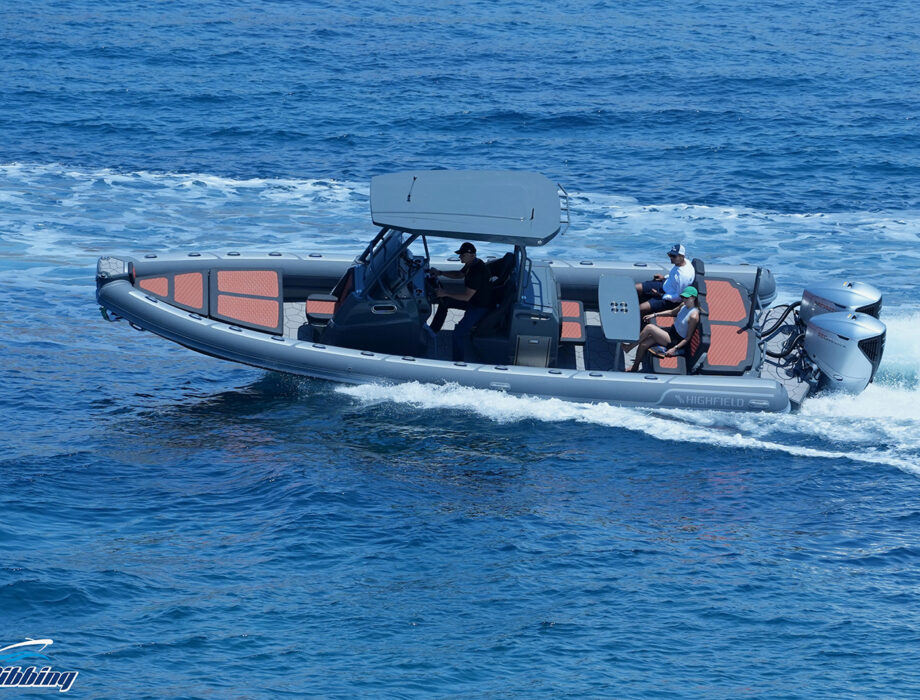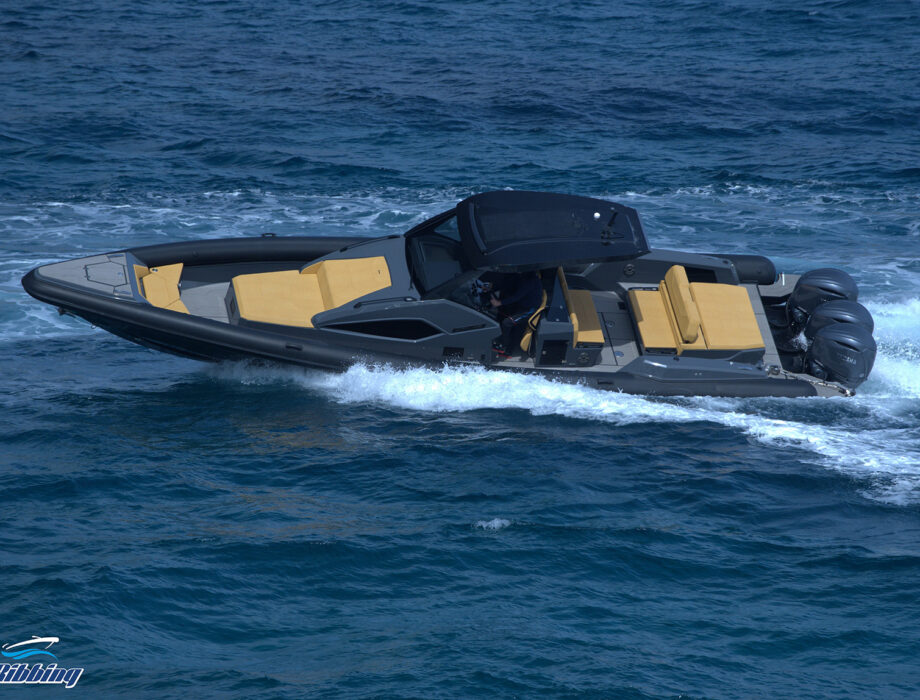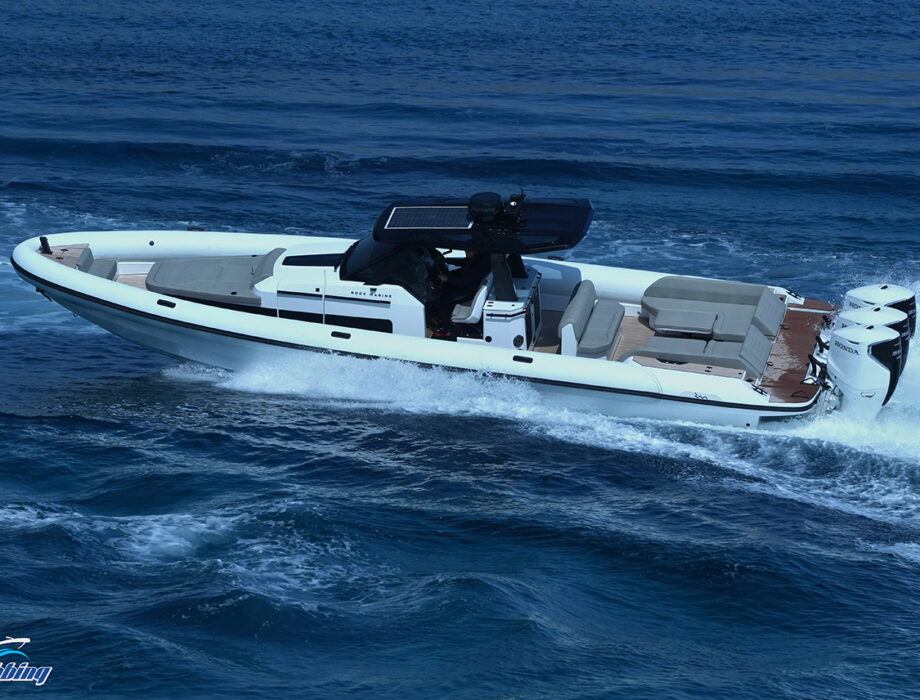
ROCK 36 – Twin V6 300hp Yamaha
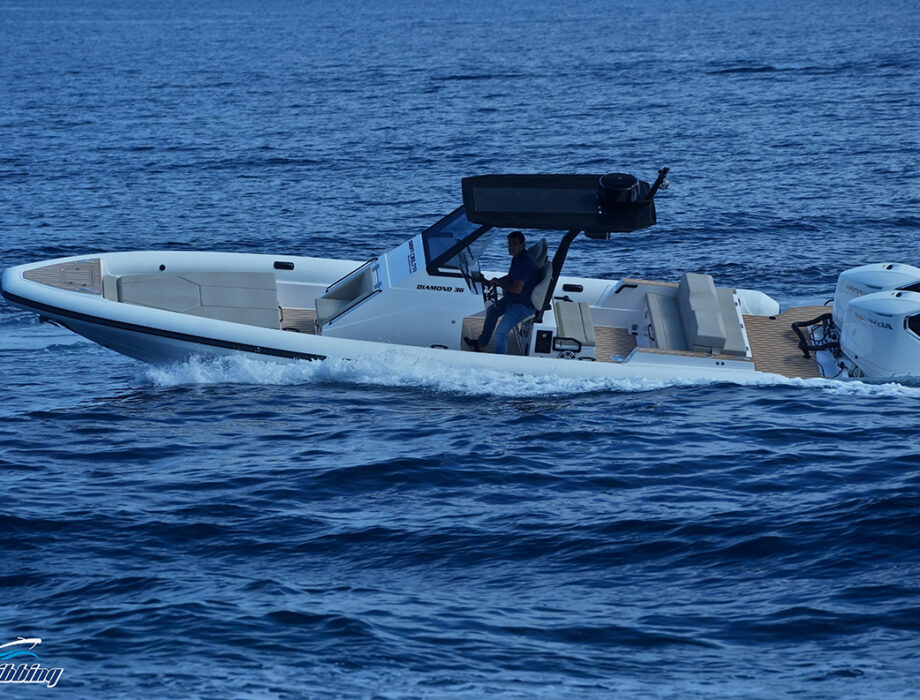
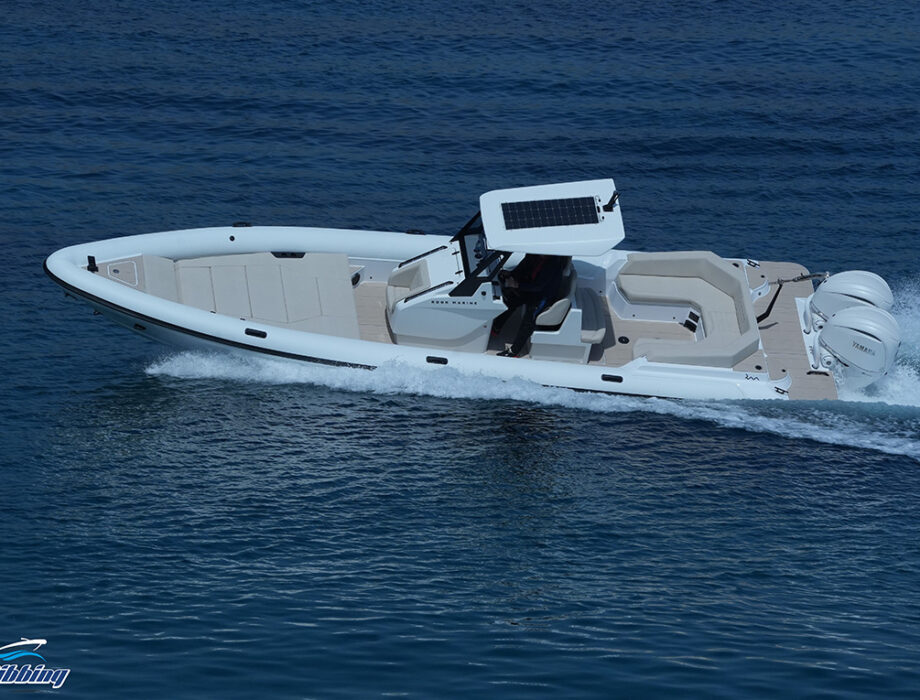
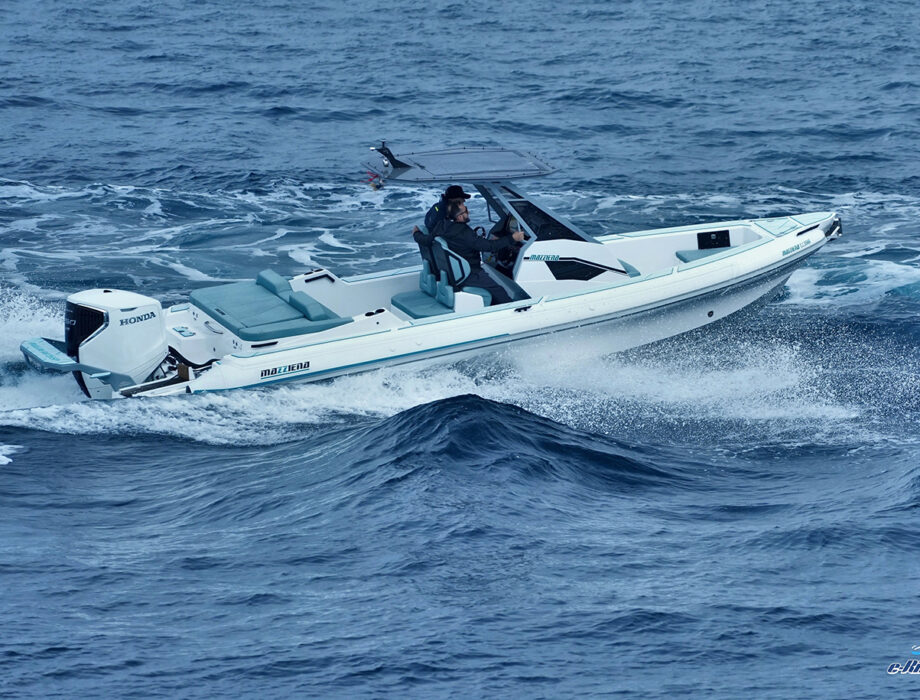
SEADELTA Diamond 36 – Twin Honda BF350 V8
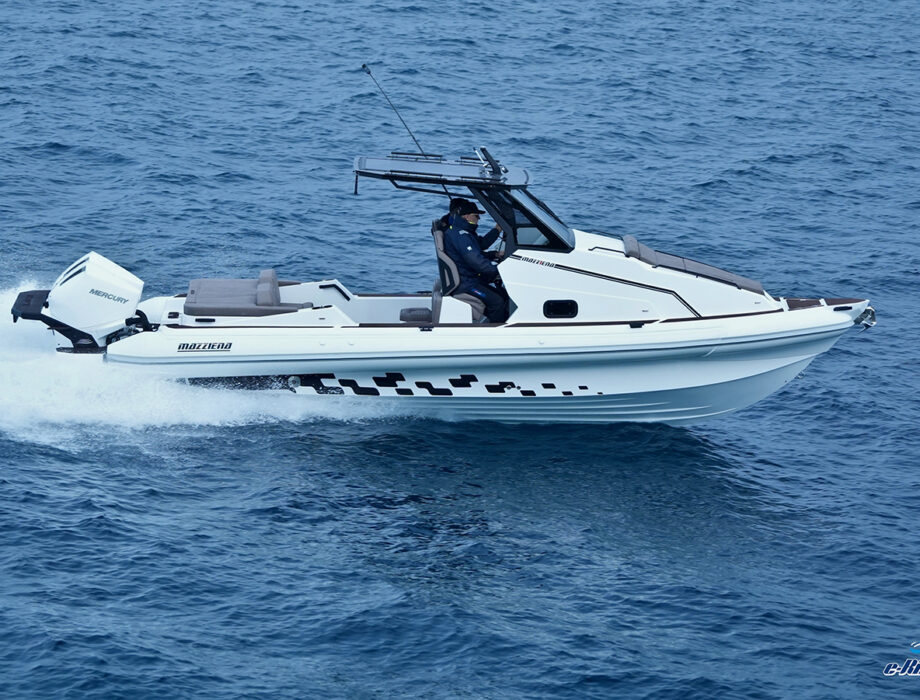
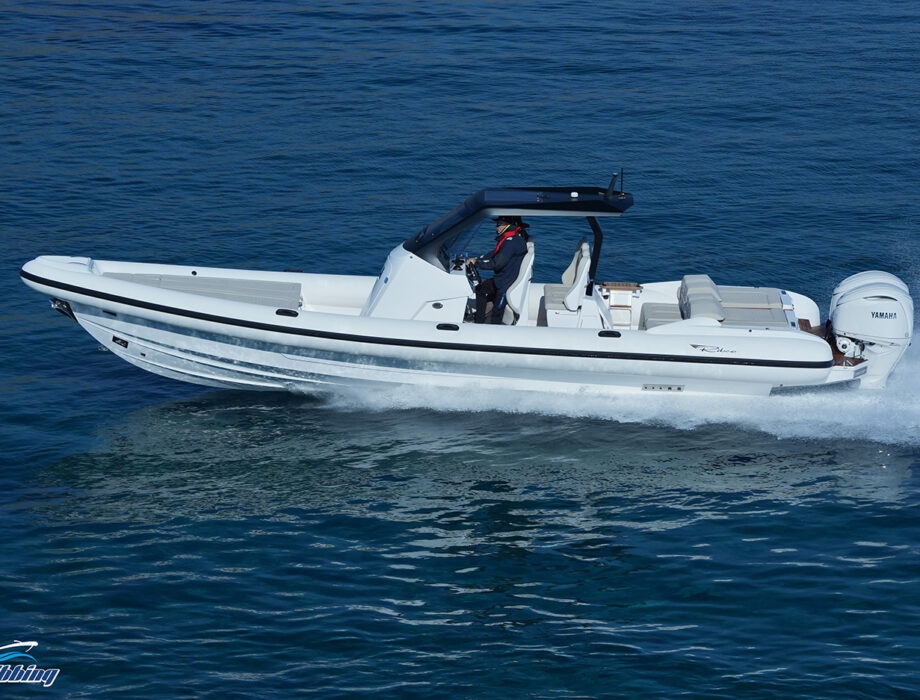
ROCK 36 – Twin V6 300hp Yamaha
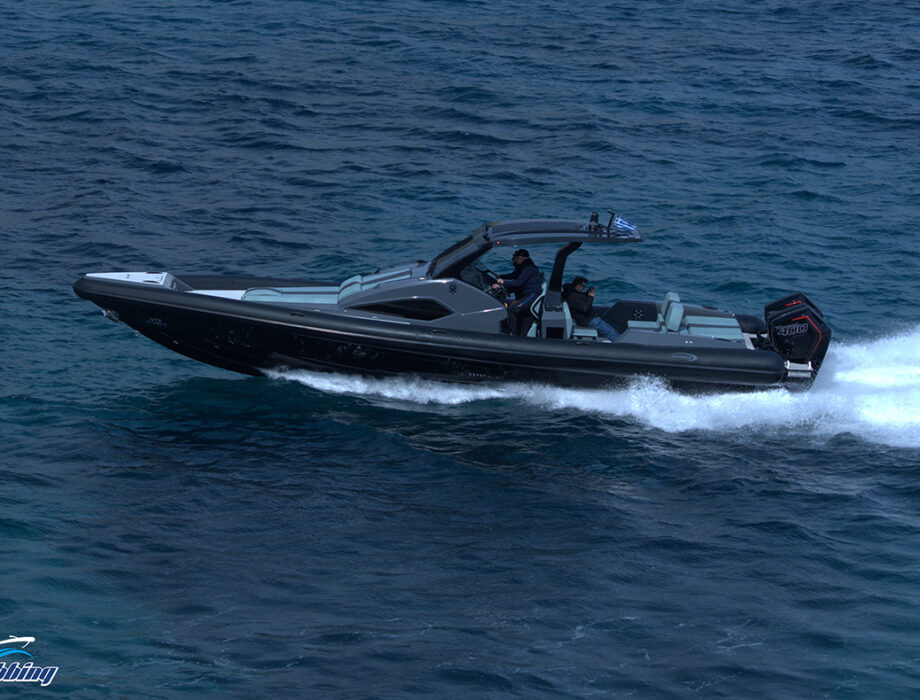
SEADELTA Diamond 36 – Twin Honda BF350 V8


Seafighter SFR 42 - Triple Yamaha 350 V6
e-Ribbing had the opportunity to conduct another sea trial of SFR 42, examining closely both its behavior on the water and the design philosophy followed by the shipyard. Seafighter SFR 42 aims to be a complete sport cruiser, capable of covering both the needs of a fast journey and those of a multi-day getaway.
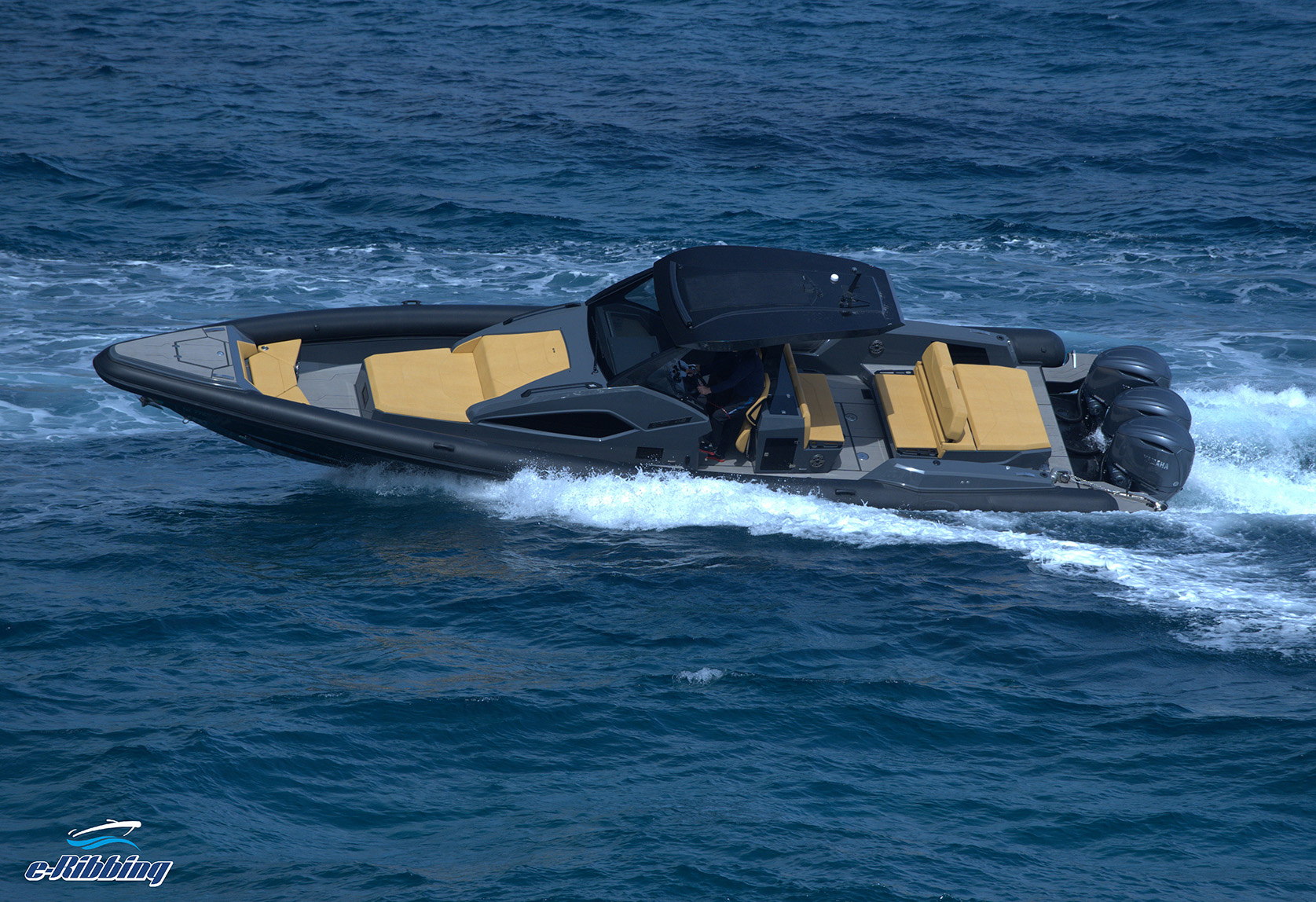
With the ability to maintain high cruising speeds while also offering generous living spaces, the new model shows from the very first moment that it was designed to deliver a balanced combination of performance, comfort, and functionality.
Design
From a design standpoint, Seafighter 42 maintains the aggressive character that defines the shipyard’s boats, with clean lines and dynamic proportions that reveal its performance-oriented nature. The design of the hull, cabin, and T-top follows a unified philosophy, creating a harmonious whole that remains both sporty and elegant.
The walkaround cabin has been kept relatively low so as not to alter the boat’s lines, while at the same time ensuring adequate interior spaces. The result is a boat that combines the dynamic appearance of a large RIB with the practicality of a sport cruiser.
Particular attention has also been given to the design of the hard top, which integrates smoothly into the overall deck layout. In addition to the necessary shade it provides to the cockpit, it offers a large surface area allowing the installation of equipment such as radar, antennas, spotlights, or even solar panels.
Deck Layout
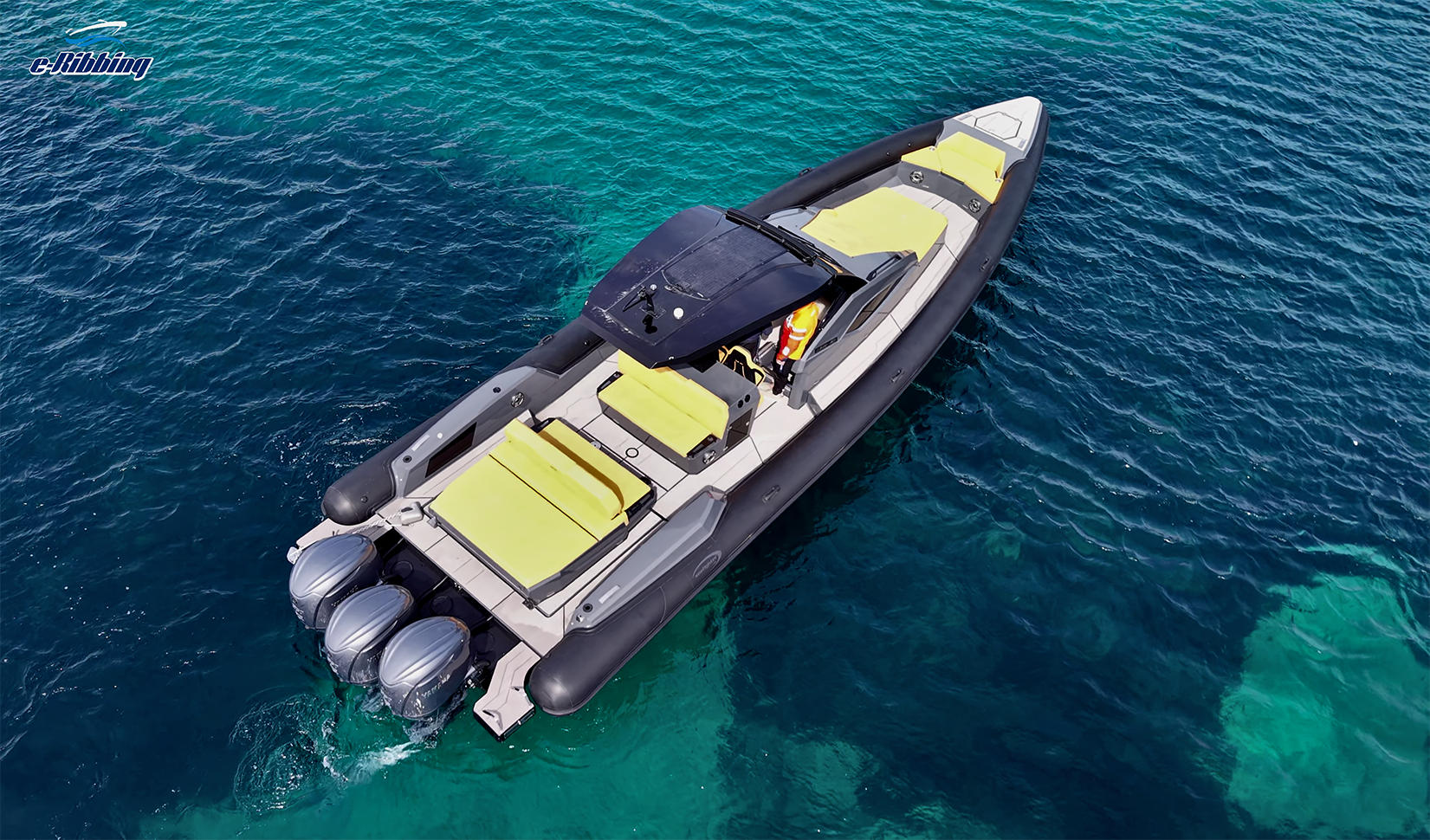
The deck layout has been designed with the primary goal of ensuring comfortable and safe movement for passengers while also creating large gathering areas. At the stern we find a spacious seating area capable of comfortably accommodating several people.
This zone functions as the main social hub of the boat, ideal for dining or relaxing during the day. At the bow there is another large lounge area, which can easily be converted into a generous sunbathing platform. This space is one of the most enjoyable spots on deck for moments of relaxation at sea.
The widest point of the boat is located in the cockpit area, something that provides a significant advantage both for the exterior spaces and for the cabin. The maximum external width of the cabin reaches 1.84 meters, while the 75 cm-wide sliding entrance door allows easy access to the interior. Two steps lead down to the cabin’s entrance area, where the maximum headroom reaches 1.84 meters, offering particularly comfortable conditions for passengers.
At the center of the deck stands the fiberglass structure that supports the hard top. On its forward side are the three independent helm seats, while at the rear there is a three-seat sofa facing aft.
At Sea
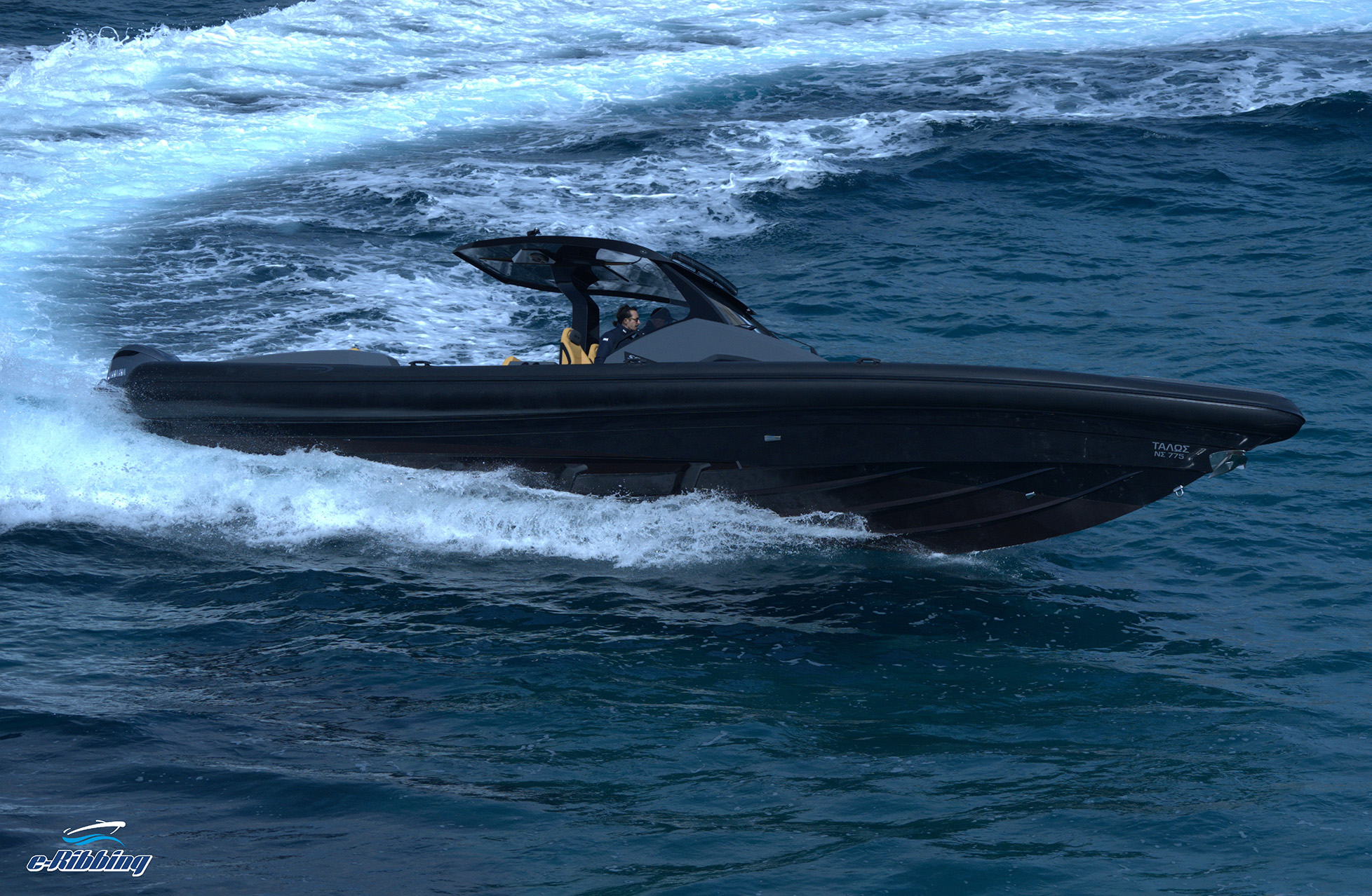
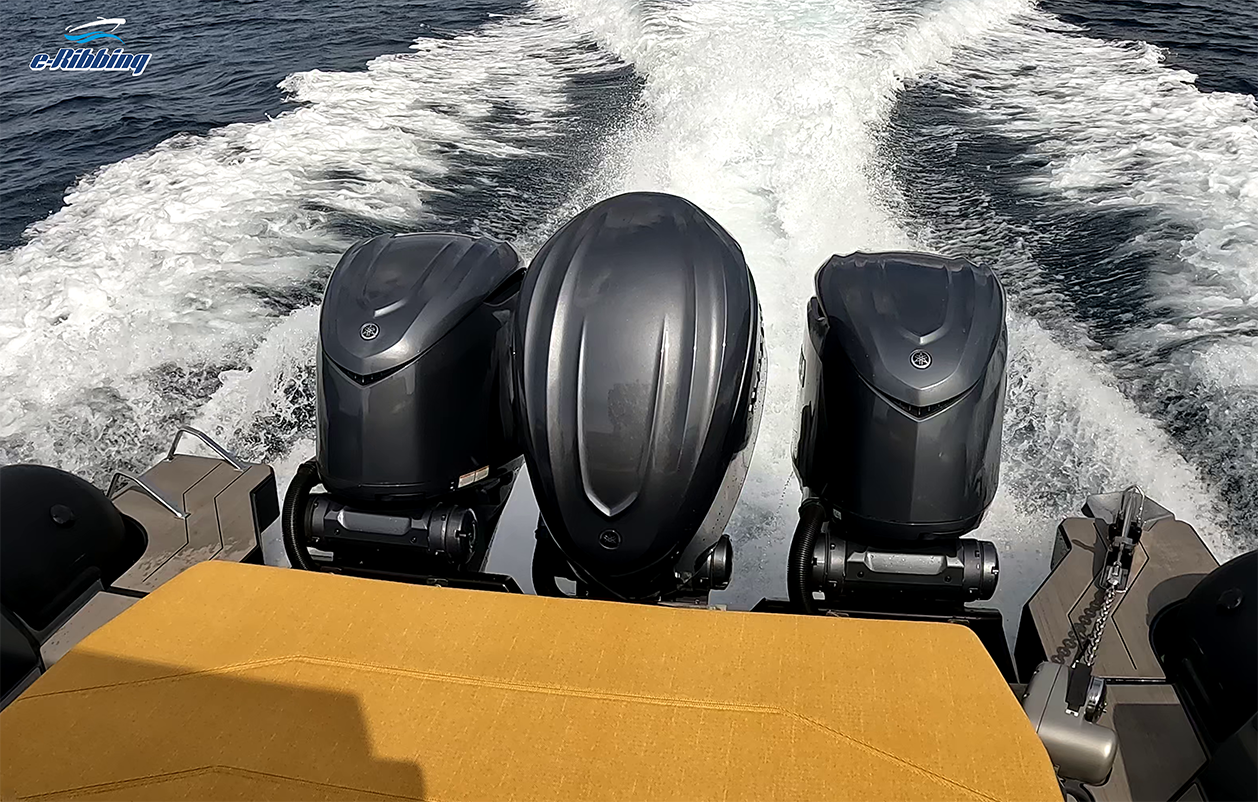
For the first time, Seafighter 42 carried on its transom three 350 hp Yamaha outboard engines, whose lower units -with a 1.75:1 gear ratio- were turning three-blade 16'' x 20'' ECO Enertia propellers. This is a combination producing a total of 1,050 horsepower, which in itself creates high expectations for performance.
Without any previous experience with this specific engines and propellers combination, and without any reference point for its behavior, we headed out to sea in order to see in practice how the boat responds with 1,050 horsepower on the transom and what the overall impression of this setup would be on the water.
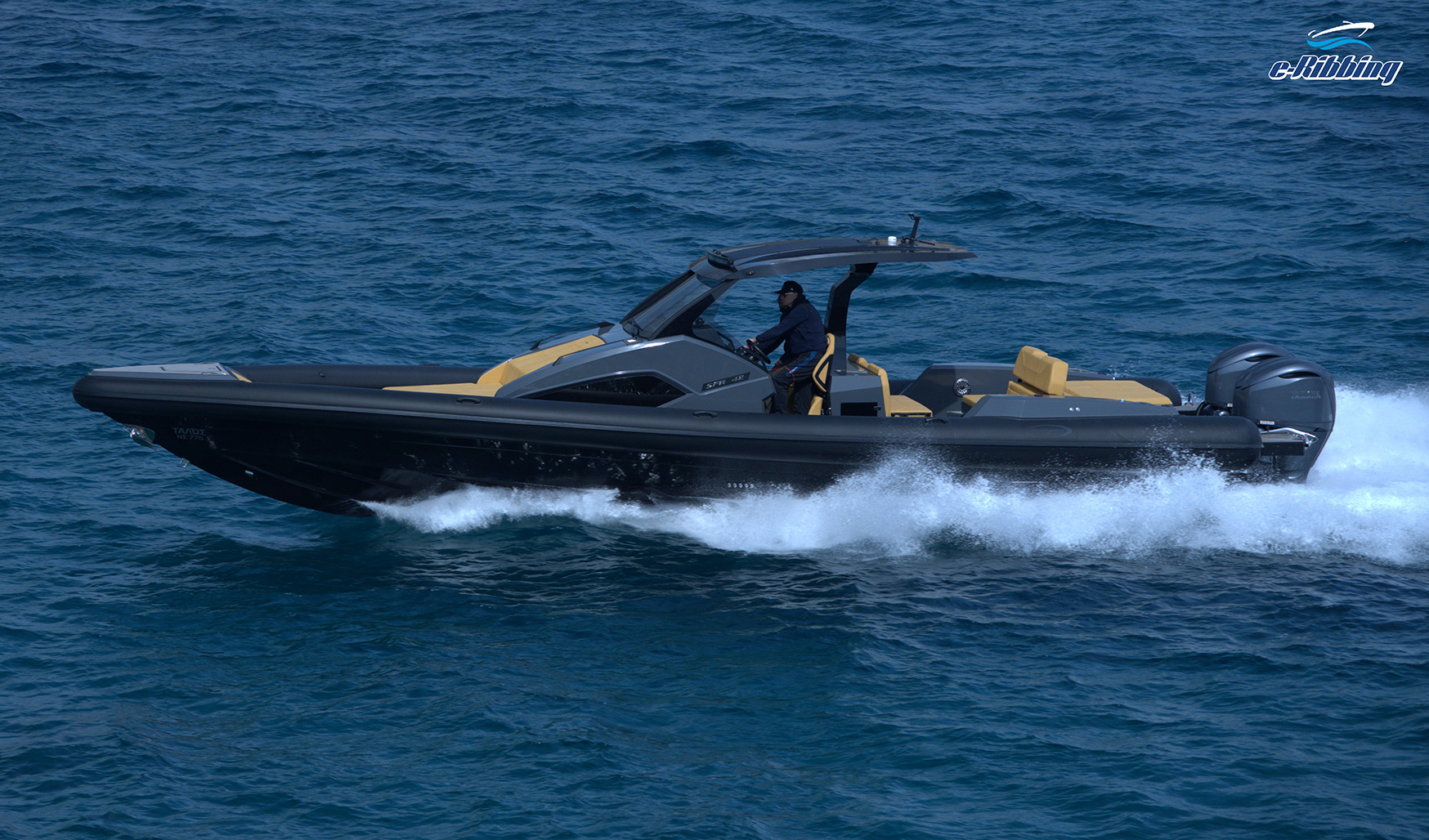
The Yamaha 350 hp V6 engines represent one of the most complete offerings in the category of large high-performance outboard engines. With a large 4.3-liter displacement and particularly refined mechanical construction, they combine high power with exceptional reliability-characteristics that have long defined Yamaha’s large-engine lineup.
One of the most significant advantages of these engines is the Digital Electric Steering system, which provides a unique feeling of control at the helm. Its operation is extremely smooth and precise, allowing the helmsman to handle even large and heavy boats without any effort.
The steering response is immediate while maintaining the necessary progressive feel that helps ensure safe control of the boat at high speeds. Particularly impressive is the ease of handling at low speeds and during maneuvering in confined spaces, where the electric steering turns helm control into a relaxed and extremely precise process.
At the same time, the absence of hydraulic lines simplifies installation and significantly reduces maintenance requirements. In practice, the combination of engines and electric steering creates a navigation experience distinguished by precision, comfort, and a sense of complete control-qualities especially appreciated by the helmsman when operating a large performance RIB such as the Seafighter 42.
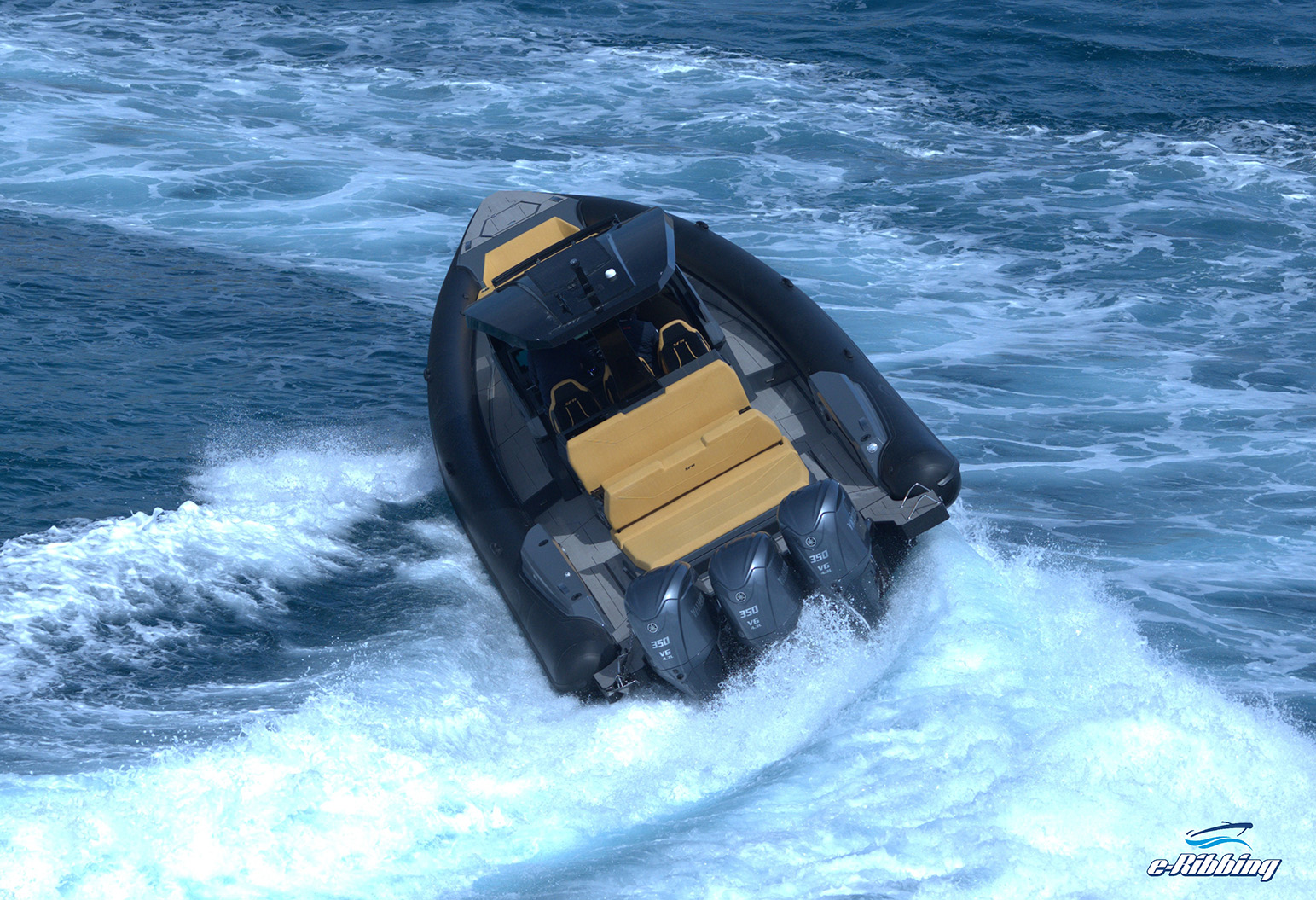
With approximately 600 liters of fuel in the tanks, three crew members, and all the boat’s basic equipment onboard, SFR 42 showed from the very first minutes that it could easily handle the large torque reserves of Yamaha’s powerful V6 engines. The boat maintained its plane already at 2,500 rpm, traveling at about 14 knots, demonstrating the efficiency of the hull at low speeds.
From there, acceleration developed smoothly and linearly, with 30 knots arriving in about 9 seconds and 40 knots appearing on the speedometer at 13 seconds.
Throttle response was satisfactory, while the boat remained stable and fully controllable even when performing more aggressive maneuvers at high speeds. The overall impression we obtained, combined with the numbers recorded during our measurements, indicates a very balanced package.
At 3000 rpm we cruised at 19 knots, consuming 4.3 liters per nautical mile, while at 3500 rpm we ran at 26 knots with consumption at 3.9 L/nm.
At 4000 rpm, speed climbed to 36 knots with consumption at 3.8 L/nm, marking the most economical cruising speed.
At 4500 rpm we traveled at 41 knots, and at 5000 rpm at 46 knots, consuming 3.9 and 4.4 L/nm respectively, with propeller slip reaching an impressive 2%.
At wide-open throttle, the engines reached 6100 rpm, after which the rev limiters engaged, while SFR 42 reached a top speed of 56 knots, recording 2.3% slip.
You can see our detailed measurements in the table below:
Analyzing the data from our measurements, we observed particularly low slip values after 4000 rpm with these propellers and with the engines mounted at their current height. Equally characteristic-and highly indicative-is the instant 10-knot increase in speed when moving from 3500 to 4000 rpm.
Although during our tests the engines exceeded the maximum permissible rpm by about 100 rpm before the limiters engaged, the overall picture indicates that the propeller selection and installation setup fall within the correct parameters.
In practice, this means that when the boat travels fully loaded -with full fuel tanks, additional equipment, and more people onboard- the engines will still operate very close to their ideal maximum rpm range. In this way they can deliver their full power without being overstressed.
This ensures that the combination will maintain its performance and efficiency even when loading conditions increase or when sea conditions become more demanding.
At the same time, proper engine operation is ensured, which is a key factor for long-term reliability and overall engine lifespan.
However, it is not excluded that with a different propellers combination and minor adjustments to the engines mounting height we could further improve the performance of this setup.
With Two Engines…
We shut down and raised the center engine, continuing our tests with the two outer engines in operation. SFR 42 planed without particular difficulty, and within a few seconds we were traveling at 30 knots at 4,000 rpm, with the engines running smoothly and effortlessly.
Conclusion
Seafighter 42 represents a complete proposal in the max RIB category, combining performance, space, and accommodation capability. The carefully designed deck layout, the spacious walkaround cabin, and the high performance create a boat capable of covering multiple usage scenarios.
Whether for fast journeys or multi-day excursions, SFR 42 appears to possess all the elements required from a modern sport cruiser RIB.
Manufacturer:
Seafighter Rib
32 Ifaistou St., Industrial Area of Koropi - Attica
Tel: +30 210 8972720
info@seafighter-rib.gr