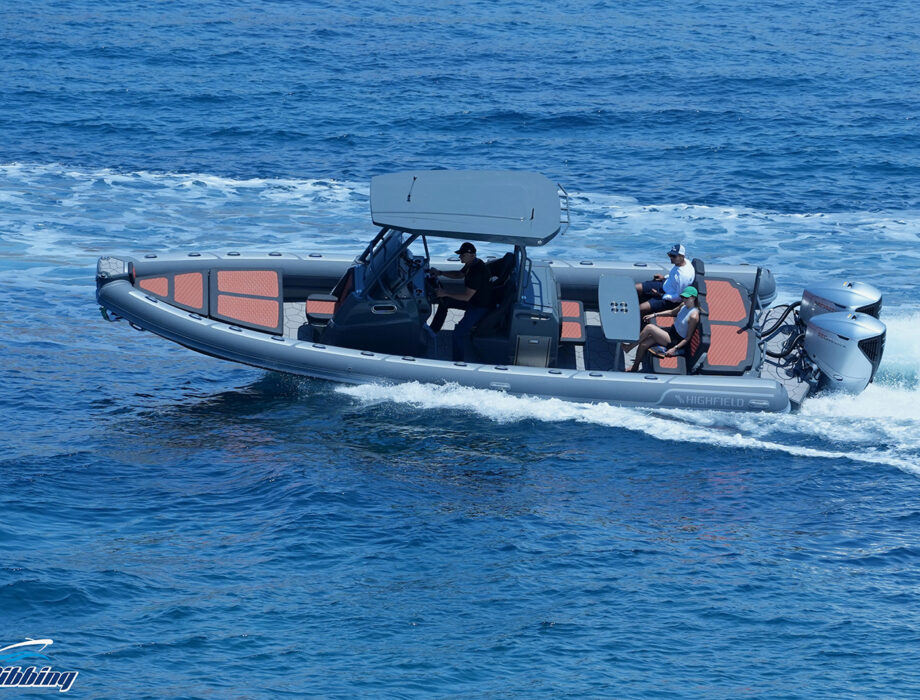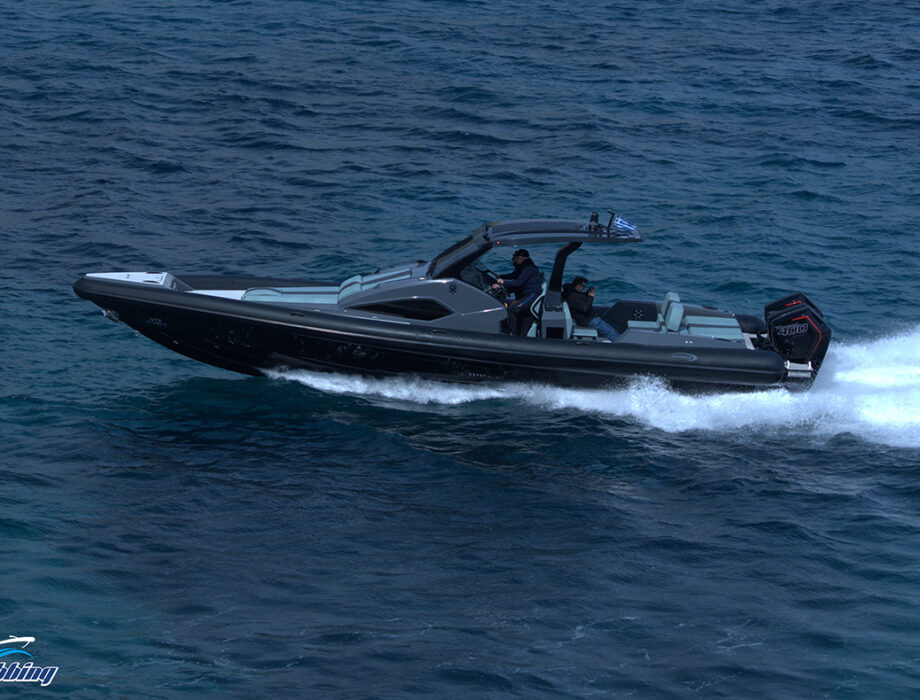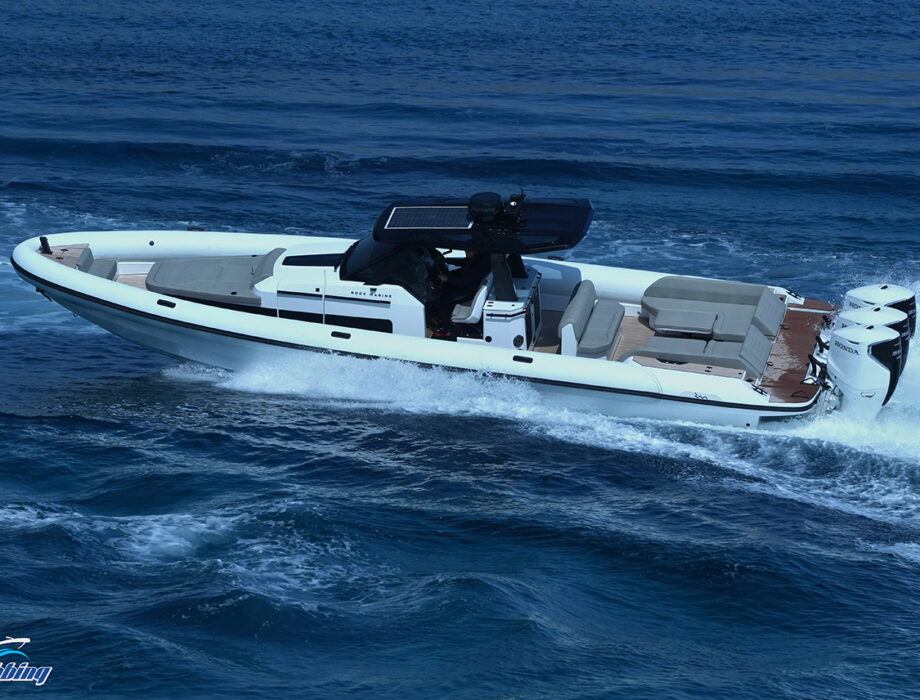

Stingher 32 GT – 2 x 300hp Verado 4.6L V8

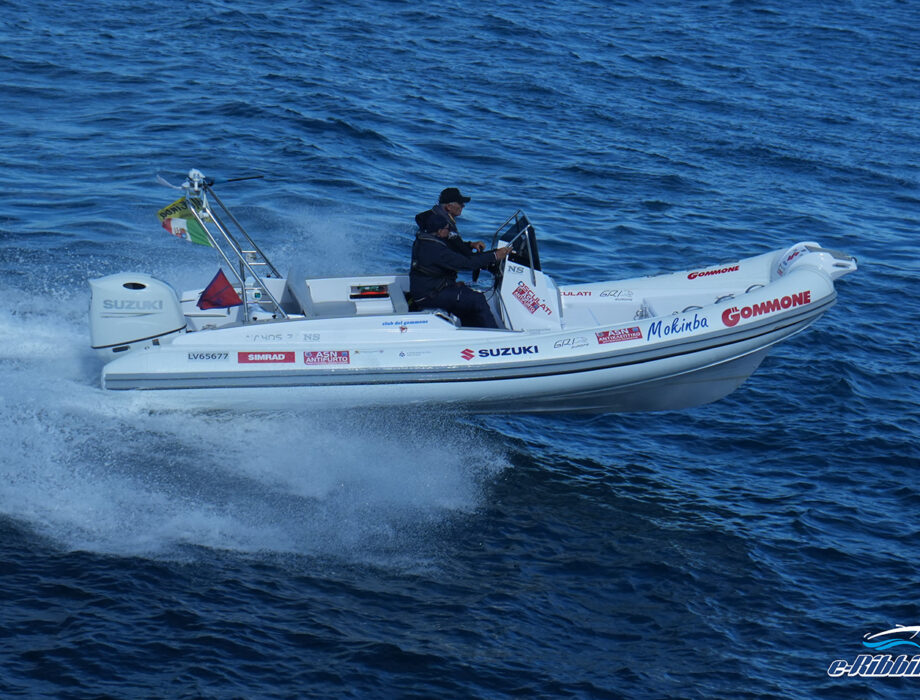
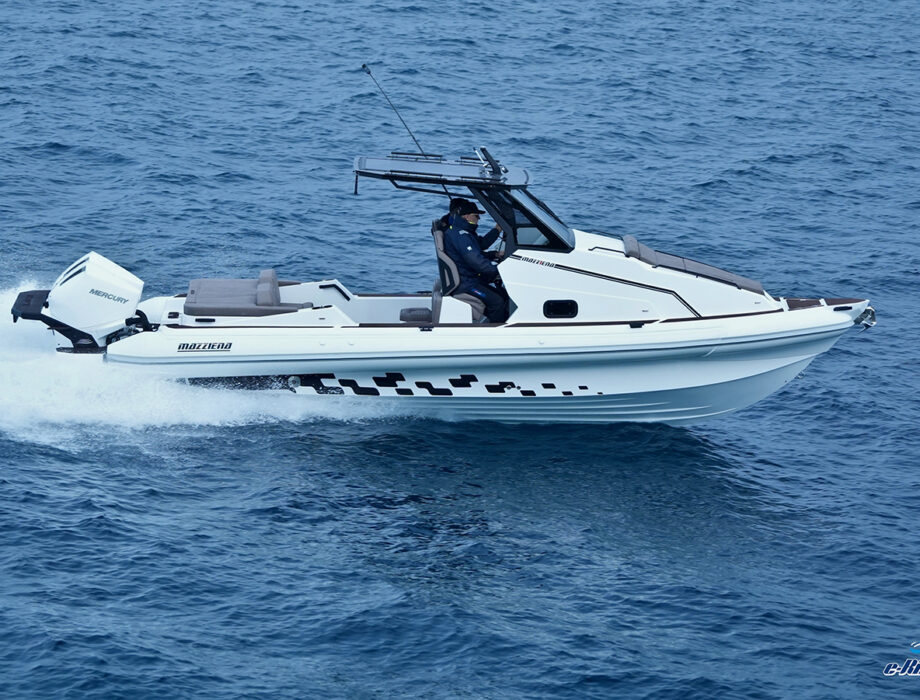
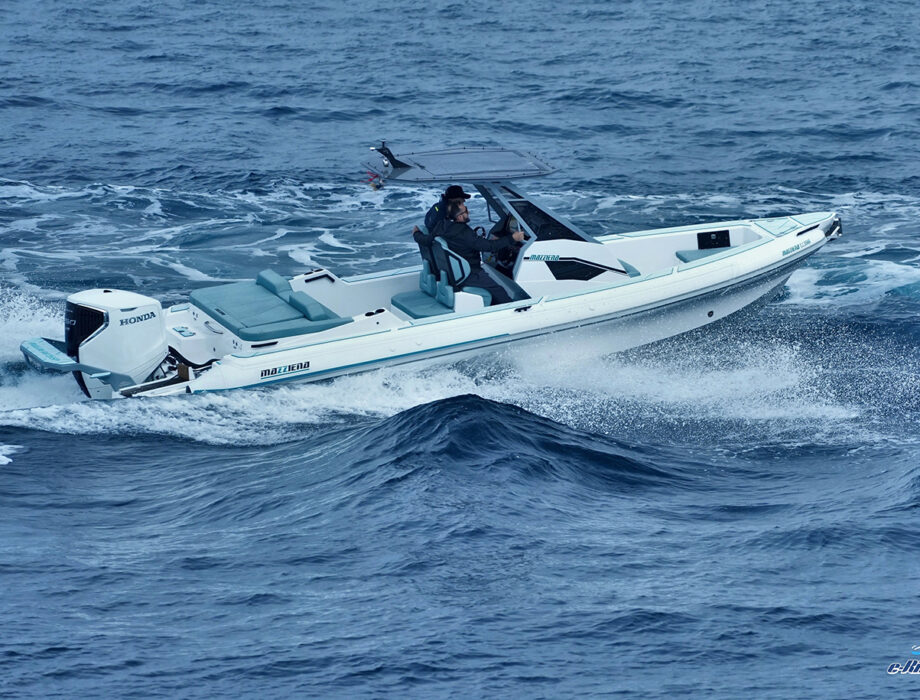
Mazziena 26SP – DF350A dual prop Suzuki
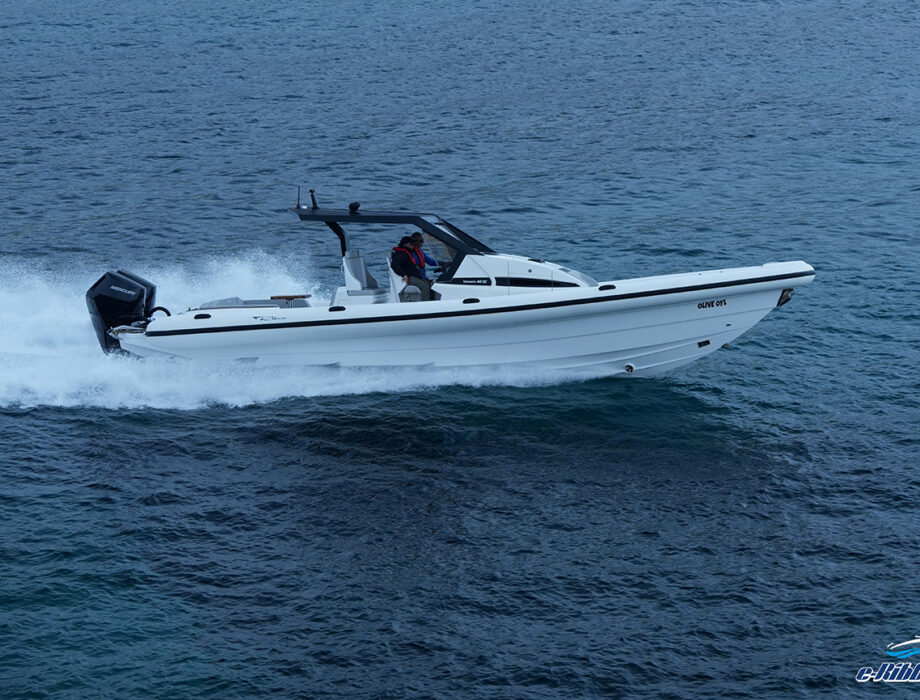
Stingher 32 GT – 2 x 300hp Verado 4.6L V8
Mazziena 26SP – DF350A dual prop Suzuki


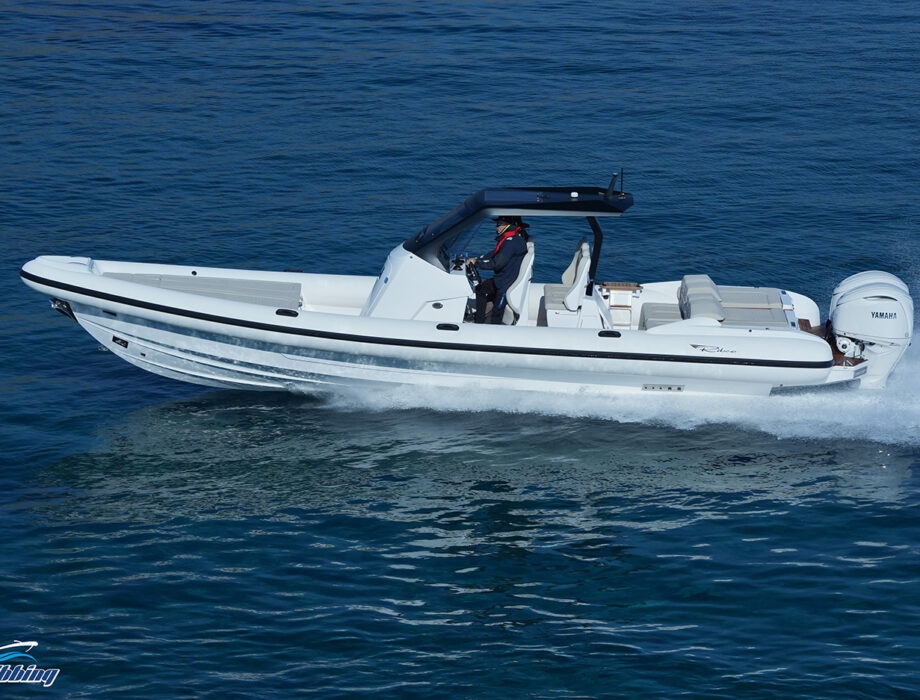
RIBCO Venom 30 – Yamaha 4.3L V6 F350
It hasn’t been a long time since we last tested the new Venom 30 that was rigged with a pair of Yamaha F200s and now I have been given the opportunity to run her with the new F350 on her transom, a sea trial that will give us very useful conclusions about both the new Yamaha engine’s performance and also the permanent dilemma that concerns many marine friends regarding single or twin engine installation.

The new Venom 30 needs no special introduction.
She is the latest creation of the RIBCO yard in the fields of the popular 30ft class, boasting outstanding features that even larger boats would envy of. It only takes a few minutes of observation to see the excellent build quality, the generous and luxurious deck as well as the exceptional off-shore characteristics of her stepped hull, elements that make up a complete and unique whole that fills us with satisfaction and joy even when we are at anchor in some idyllic bay or when traveling in bad weather conditions.
Her combination with Yamaha's new F350 engine completes an enviable package in terms of performance, reliability and elegance, which allows us to enjoy the sea without compromises and anxieties.

The F350 is a valuable addition to Yamaha's range of V6 engines that has come to bridge the power gap between the V6 and V8 XTO engines.
With an impressive 11:1 compression ratio and larger intake and exhaust valves than the 300hp V6, it uses the same diameter electronic throttle valve as the V8 XTO 450 to maximize airflow equaling thus more power.
It is the lightest engine in its class allowing it to fit a wider range of boats, while the integrated Digital Electric Steering ensures a clean, spacious bilge with no pumps, hoses or control units, resulting in more free surface on board, tidier appearance and of course a huge limitation of work and additional costs.
It is also worth noting that the new F350 has a more reinforced and efficient gearbox, while with the Thrust Enhancing Reverse Exhaust (TERE) technology it keeps the exhaust gas bubbles above the anti-ventilation plate and away from the propeller in reverse up to 2500 rpm, offering cleaner water and therefore better propeller grip ensuring more thrust, a fact that we will especially appreciate in our handlings during docking.
At sea
The F350's lower unit were turning a 4-blade 15 1/4΄΄x 20΄΄ LEXOR stainless steel propeller with a 1.75:1 gear ratio. With very good weather conditions, 270 liters of fuel, 4 people crew and the entire equipment of the boat we went out of the Anabyssos bay to record our measurements.

Without having previous experience with this particular set-up, I was trying to feel the behavior of the propellers in relation to the particular stepped hull.
The Rib was noticeably slow to get on plane and accelerate to 30 knots, according to the numbers recorded, while standing on plane at 2400 rpm at a speed of 12.5 knots, consuming 25 liters per hour.
Throttle response was poor at low rpm and the Venom 30 started to feel good after 4000 rpm. All of the above evidence pointed to the unsuitability of the propeller we were wearing, which began to perform well in the midrange.
At 3000 rpm, our speed was 16 knots with a fuel consumption of 2.06 liters per nautical mile, while at 3500 rpm we were cruising at 22 knots burning 1.8 liters per mile.
At 4000 rpm we were running at 34 knots with consumption dropping to 1.5 liters per mile, recording the most economical cruising speed.
At 4500 rpm we were travelling at 40 knots burning 1.6 liters per mile, while at 5000 rpm our speed was 44.5 knots with the engine "drinking" 1.97 liters per nautical mile.
At wide open throttle, the Venom 30 reached a remarkable top speed of 51.5 knots with the engine revving very close to its maximum rpm limit, showing us a seemingly very good set-up.
You can see our measurements in the table below:
However, a closer look at the table of measurements, in combination with the feeling we got, clearly show us that this particular boat-engine-propeller combination needs significant interventions, mainly related to the choice of a different propeller and perhaps to the height position of the engine.
The lag was evident up to 4000 rpm, as shown by the particularly high slip values we recorded in that range.

So it's really worth going to a larger diameter and 18inch of pitch propeller which will greatly improve throttle response and acceleration, keep the boat on plane at lower rpm, while increasing midrange cruising speed with immediate and significant reduce of the fuel consumption.
It will also give us more thrust at low rpm, which we will especially appreciate when travelling in bad weather conditions, while the engine will be able to reach its maximum rpm limit even when the Rib is carrying her usual loads.

Manufacturer:
RIBCO Marine
178 Ag. Marinas-Koropiou Ave, 19400 Koropi
Τel.: +30 22910 90800,
Fax: +30 22910 92159
email: sales@ribcomarine.com
www.ribcomarine.com